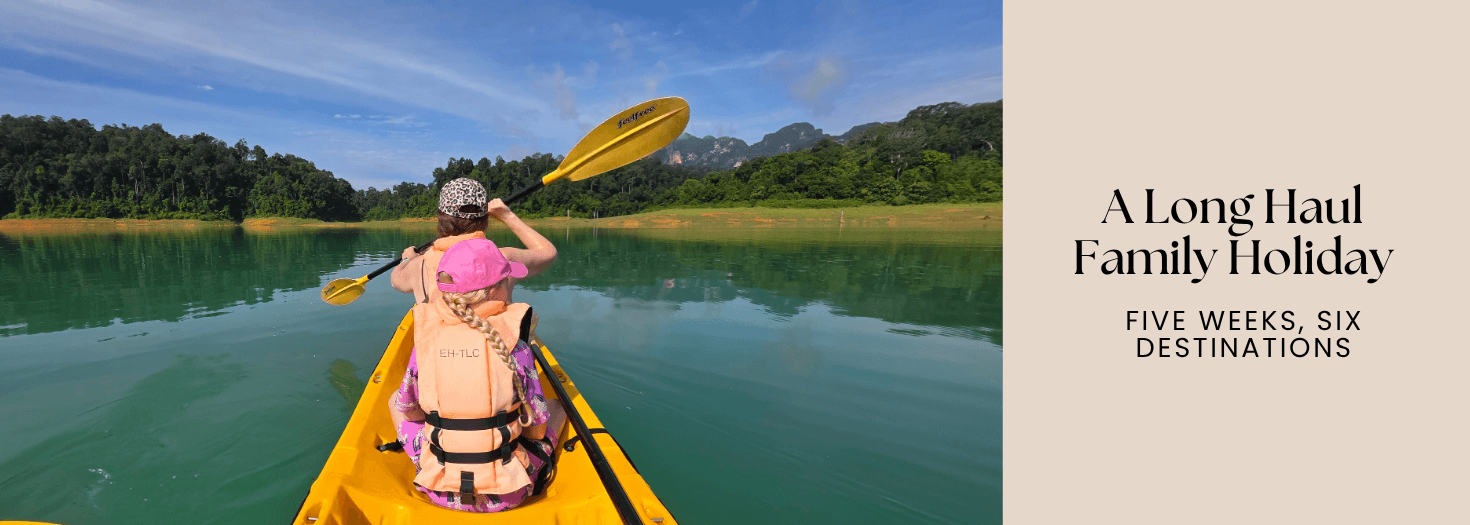
A Long Haul Family Holiday: Five Weeks, Six Destinations
Table of Contents
- Our Family Journey Through Asia and the Indian Ocean
- Our Long-Haul Family Holiday at a Glance
- Our Five-Week Asia Family Itinerary
- Singapore: The Perfect Introduction
- Kuching and Semenggoh: An Orangutan Experience in Borneo
- Kota Kinabalu and Shangri-La Rasa Ria
- Gaya Island: Rainforest, Reptiles and Turtles
- Khao Lak and Devasom: A Proper Pause
- Elephant Hills and Khao Sok: Ethical Elephant Encounters in Thailand
- Koh Samui and Santiburi: Beach, Space and Family Comfort
- Bangkok: A Clever One-Night Stop
- Sri Lanka: Back to a Destination We Love
- Uga Bay: East Coast Downtime
- Gal Oya: Family Safari by Boat in Sri Lanka
- Horathapola: The One-Night Regret
- Siyam World Maldives: A Family-Friendly Finale
- The Planning & the Motivation
- Building the Route
- Avoiding Travel Fatigue on a Multi-Centre Family Holiday
- Making the Transitions Work
- Travelling With an Eight-Year-Old
- Was This Long Haul Family Holiday Suitable for an Eight-Year-Old?
- The Luxury Touches That Mattered
- How Many Destinations Should You Visit on a Long Haul Family Holiday?
- Who is This Type of Trip Right For?
- My Golden Rule for Complex Itineraries
- Final Reflections
- FAQs
Our Family Journey Through Asia and the Indian Ocean
As Head of Product at Destinology, I spend much of my time travelling to destinations, experiencing hotels and building itineraries for our clients. But this was a very different kind of trip: five weeks travelling through Asia and the Indian Ocean with my wife and eight-year-old daughter. It had been a long time since I had taken that much time off to travel, and a long haul family holiday of this scale was never going to be a small undertaking. It was ambitious, multi-stop and, above all, designed around giving our daughter as many new experiences as possible.
In this first-hand account, I’m sharing exactly how we planned and experienced the journey – from orangutans in Borneo and elephants in Thailand, to safari in Sri Lanka and a final few nights in the Maldives. If you're considering a long haul family holiday in Asia, this is what five weeks of travelling with an eight-year-old actually looked like – including the hotels, wildlife experiences, transfers, challenges and little details that made the trip work.
Our Long-Haul Family Holiday at a Glance
Length: Five weeks
Travellers: Two adults and one eight-year-old
Destinations: Singapore, Borneo, Brunei, Thailand, Sri Lanka and the Maldives
Travel Style: Wildlife, adventure, beaches, culture and luxury
Best Suited to: Families who enjoy variety and don't mind being on the move
Our Daughter's Age: Eight
Standout Experiences: Orangutans in Borneo, rainforest walks, ethical elephant encounters, safari by boat in Sri Lanka, tuk-tuk rides and a seaplane journey to the Maldives
The route covered a lot of ground, but there was a method to it. We deliberately alternated cities with nature, wildlife with beaches and busy days with time to do very little. That balance became the secret to making such an ambitious trip work for us.
Our Five-Week Asia Family Itinerary
Our journey took us from Singapore into Malaysian Borneo, with time in Brunei along the way, before continuing to Thailand, Sri Lanka and finally the Maldives.
The broad route was:
Singapore → Kuching → Brunei → Kota Kinabalu → Gaya Island → Khao Lak → Khao Sok → Koh Samui → Bangkok → Sri Lanka → Maldives
Each stop had a purpose. Singapore was an easy introduction to Asia. Borneo brought wildlife and rainforest. Thailand gave us a mixture of beach, adventure and family-friendly luxury. Sri Lanka combined wildlife, culture and countryside. And the Maldives was deliberately saved for last: five nights of doing considerably less.
That sequencing made a great difference. Rather than trying to cram every possible experience into every destination, we gave each place room to breathe and its own personality.
Singapore: The Perfect Introduction
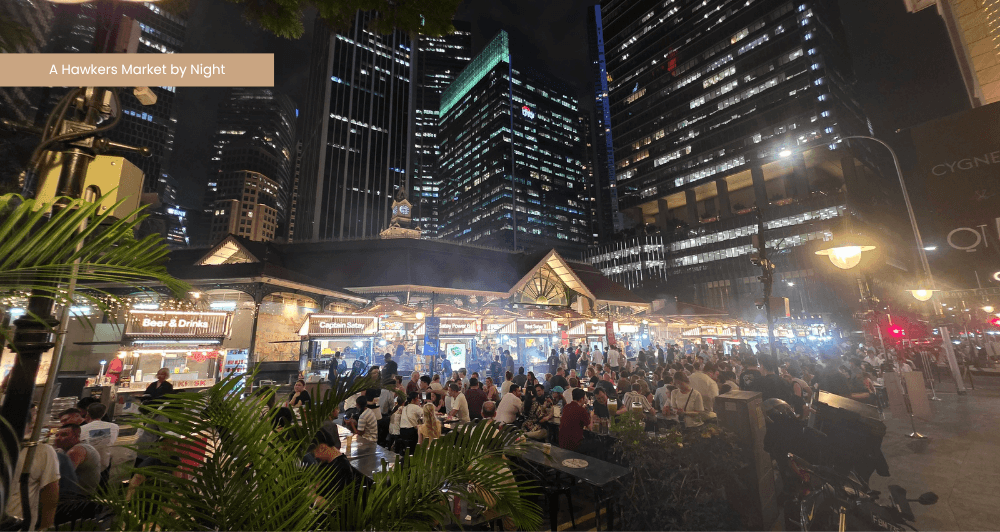
Singapore was a great place to start this long haul family holiday, as it had changed enormously since I was last there. Twenty years ago, I didn’t find it quite as exciting as I do now, but today it has a real energy, especially around Marina Bay, Gardens by the Bay and the riverfront areas.
We stayed at Paradox Singapore at Clarke Quay, and the location worked really well for us. Clarke Quay gave us easy access to restaurants and the river, and we could walk towards Marina Bay and back, even in the heat. The hotel also had a large pool area, which was a major factor for us as a family.
One of the highlights was an evening tour combining Gardens by the Bay, the Garden Rhapsody light show, Marina Bay Sands SkyPark and a bumboat cruise along the Singapore River. It was a great way to orientate ourselves and see the city at night. My daughter loved the Merlion – particularly trying to capture the classic photo with the water pouring into her mouth.
Singapore worked because it was exciting, but easy. And that mattered after the long flight.
Kuching and Semenggoh: An Orangutan Experience in Borneo
From Singapore, we flew to Kuching in Sarawak. It’s a part of Borneo we do not feature heavily enough at Destinology, but it really has a lot to offer. Kuching has a cultural feel, a lovely riverfront and a sense of being a little less developed than Sabah, which gives it its own character.
We stayed at The Waterfront Hotel, which gave us a great base overlooking the river. There is a water show in the evening, and locals gather along the riverfront, which gives the place a really nice atmosphere. The hotel also connects to a shopping mall, which was practical when we needed anything.
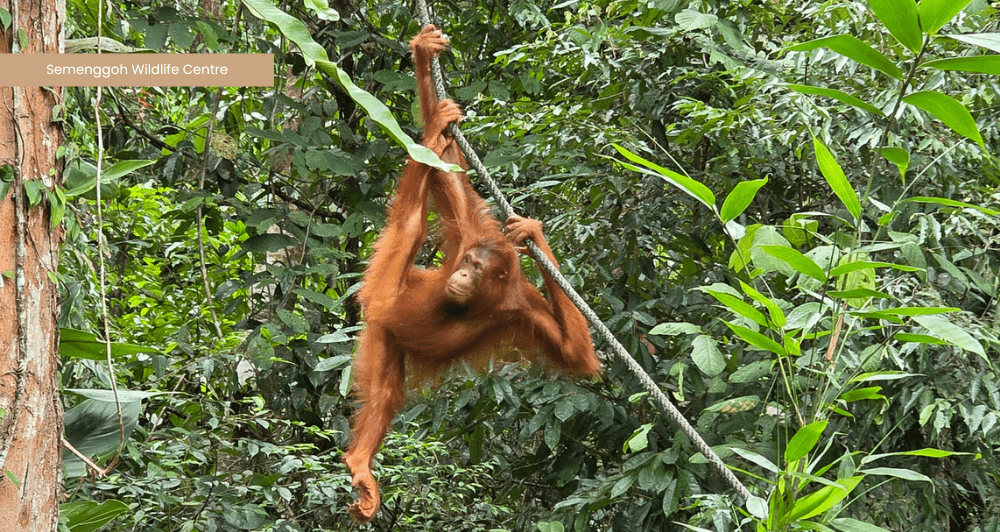
The main reason for travelling to Kuching was Semenggoh, the orangutan sanctuary. We went in the morning and waited for the orangutans to appear at the feeding platform… but none came. These are wild orangutans, so there is no guarantee – and we did know that. In fact, we preferred that over an orchestrated appearance. They come if they want to come, and if they have found enough food in the forest, they may not appear at all. So we were told we could keep our ticket and return in the afternoon, and we did. And this time, they came.
We saw more than a dozen orangutans, from little babies to the big and dominant males. Watching mothers move through the trees with babies tucked underneath them was so special, and it turned out to be one of the biggest highlights of the entire trip – it felt authentic because nothing was staged. The animals were in control of the experience, not us.
That is exactly how wildlife encounters should feel.
Kota Kinabalu and Shangri-La Rasa Ria
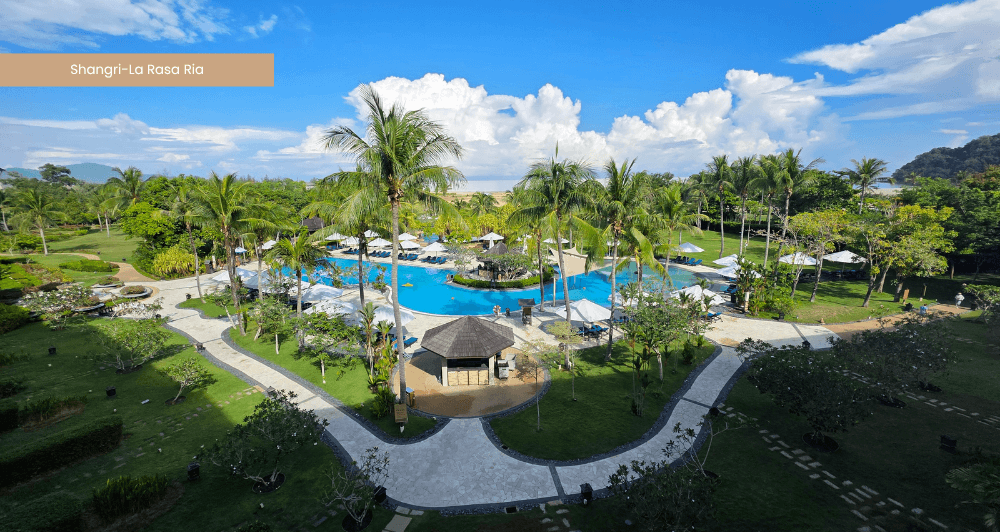
After seeing friends in Brunei, we travelled to Kota Kinabalu and stayed at Shangri-La Rasa Ria, Kota Kinabalu. This is a hotel I have booked for clients many, many times over the years, and it’s easy to see why it works so well for families.
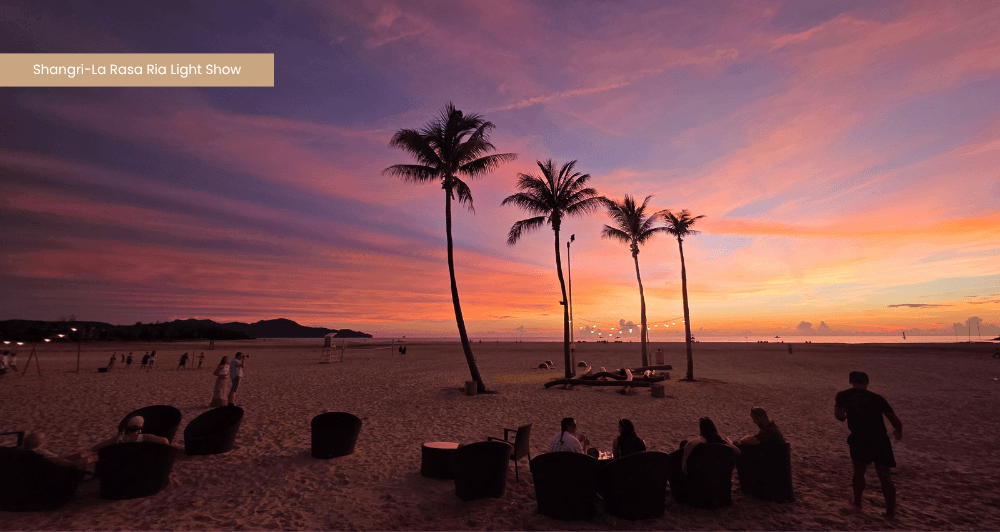
It’s expansive, with a large beach, fire shows in the evening, plenty of food and drink options, and a big pool area. There were lots of families there, and the atmosphere really suited that style of holiday.
We stayed in the Ocean Wing, which gives a more elevated and quieter experience. It is lovely, but my advice for families would probably be to consider the Garden Wing, because it’s that bit closer to the main pool and family facilities. We found ourselves walking down there and using those areas more often. For couples or those wanting something a little more adult-orientated, the Ocean Wing is then a great choice.
For families, the Garden Wing may be the better fit.
Gaya Island: Rainforest, Reptiles and Turtles
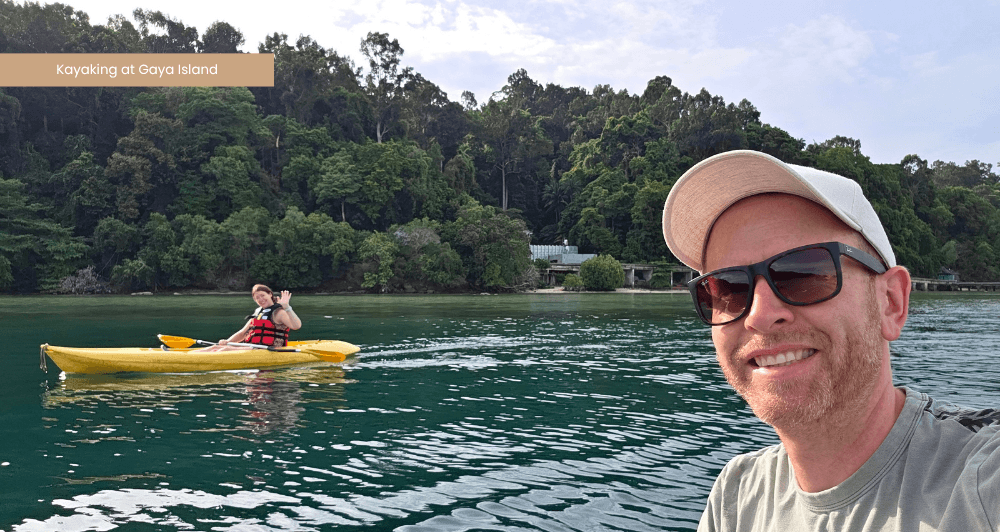
For the next element of our long haul family holiday, we travelled by road and speedboat from Kota Kinabalu to Gaya Island. I had wanted to experience this part of Malaysia for a long time, and it was completely different again.
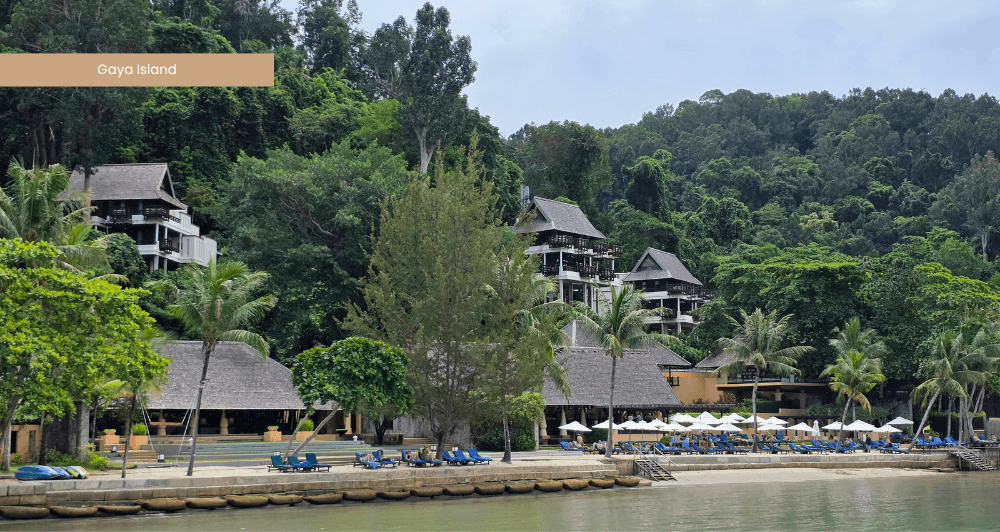
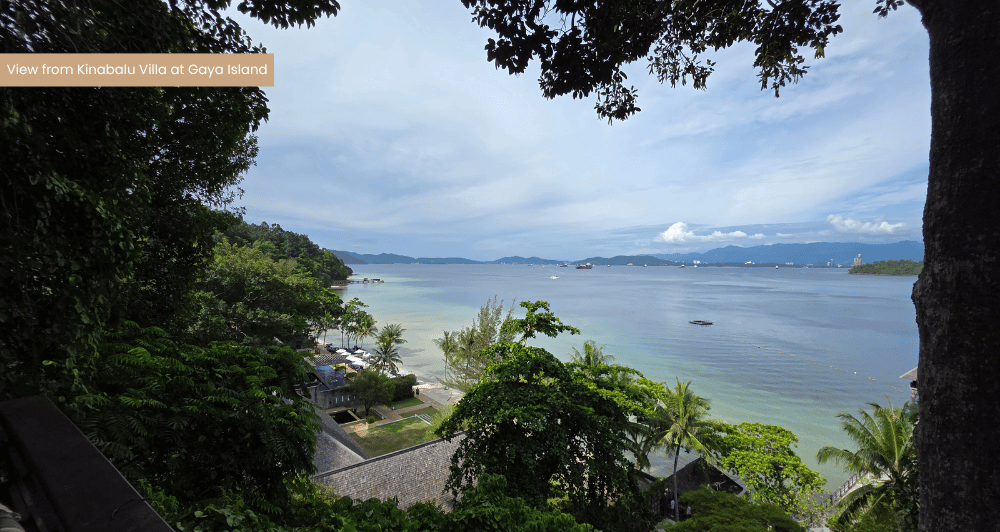
We stayed in a Kinabalu Villa, high up in the trees with views down towards the beach and beyond. You really feel as though you are staying in the rainforest. Gaya Island isn’t a huge resort, but it has a lovely feel, friendly staff, a small beach, a good pool and a really strong connection to nature.
One of the reasons we chose Gaya Island was indeed the wildlife. We visited the resort’s private beach and marine centre, where they support turtle rehabilitation. It was a great opportunity for our daughter to see a turtle being cared for by marine biologists before being returned to the wild. It wasn’t a huge space, but you could see the work being done and the care behind it.
We also did rainforest walks and saw lizards, snakes, insects, mushrooms and all sorts of life attached to trees and hidden in the forest. It was the sort of thing you might not assume an eight-year-old would enjoy, but actually she loved it. The sense of discovery made it exciting.
For families looking for family adventure holidays, Gaya Island is a particularly good example of how nature itself can become the entertainment. You don't necessarily need a long list of organised activities when there is a rainforest just outside your door.
Khao Lak and Devasom: A Proper Pause
From Gaya Island, we flew via Kuala Lumpur to Phuket and transferred up to Khao Lak. We deliberately chose Khao Lak rather than staying in Phuket because we wanted to be on the mainland and make the journey to Elephant Hills easier.
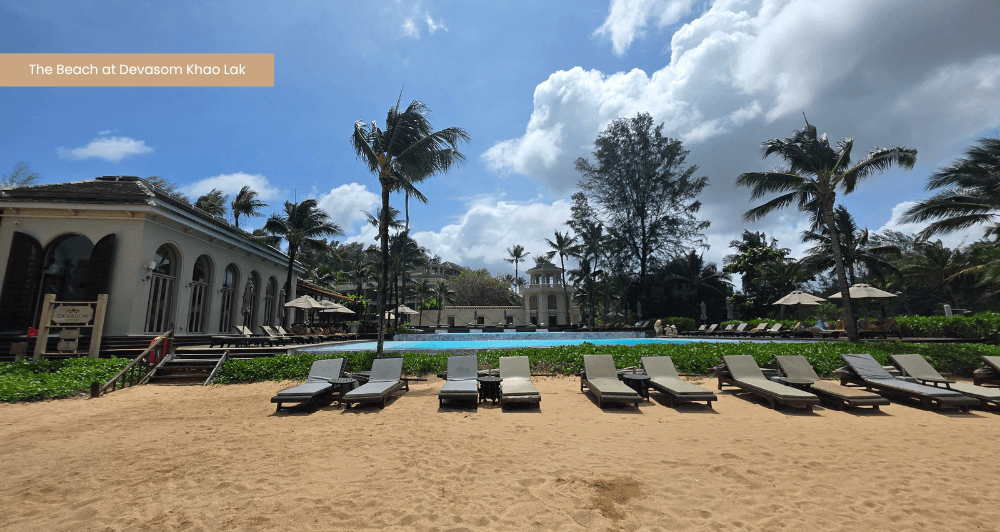
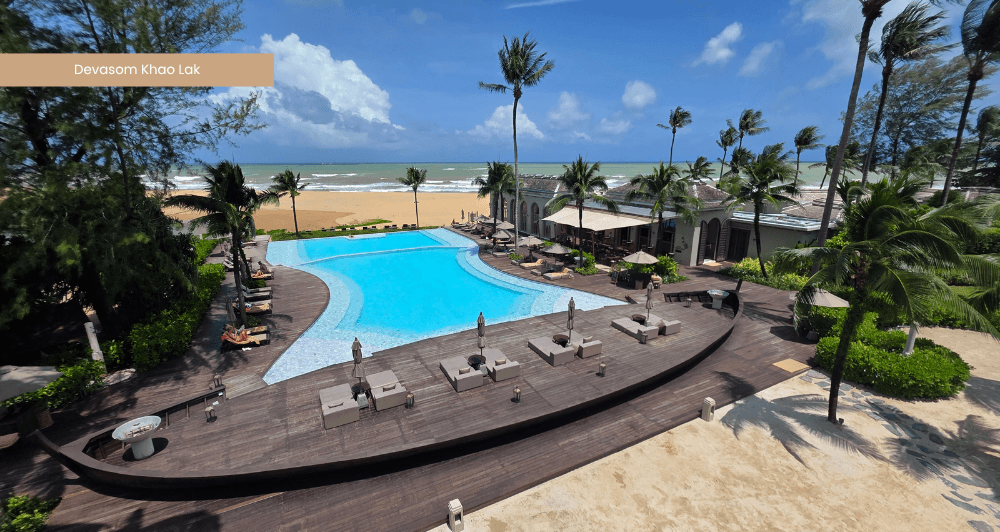
Devasom Khao Lak Beach Resort & Villas was a fantastic pause in the itinerary. After a travel day involving a speedboat and two flights, we needed somewhere calm and comfortable. We stayed in a beautiful suite with a pool and views towards the river and beach, and honestly, we hardly wanted to leave the room.
The resort itself was lush, peaceful and very beautifully designed, with a great beach and a good kids’ club. Our daughter enjoys making little friends along the way, and that gave her a bit of independence while we had some downtime.
That stay was important, because the trip was about to get busy again…
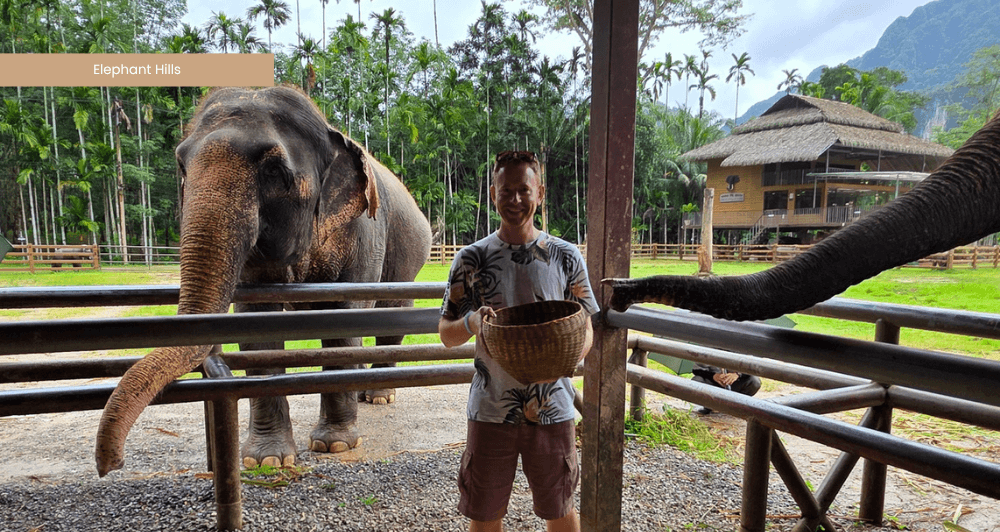
Elephant Hills and Khao Sok: Ethical Elephant Encounters in Thailand
Elephant Hills was a very different style of stay, and that was exactly why it worked at this point in the trip. It wasn’t another five-star hotel, it was luxury camping, and it felt like a proper jungle adventure.
The tents were spacious and comfortable, although I had slightly forgotten that they didn’t have air conditioning. That was the first time in a while we had experienced that, but it all added to the sense of being somewhere different.
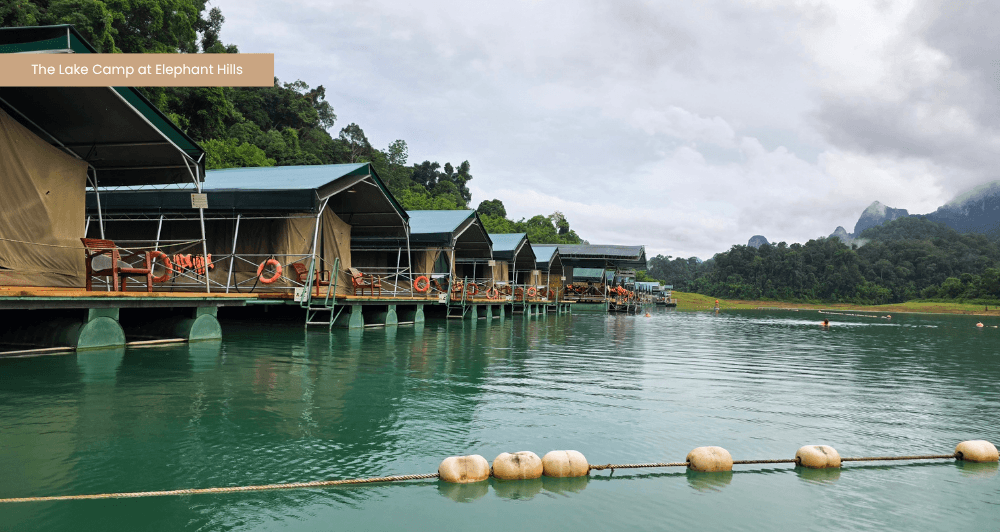
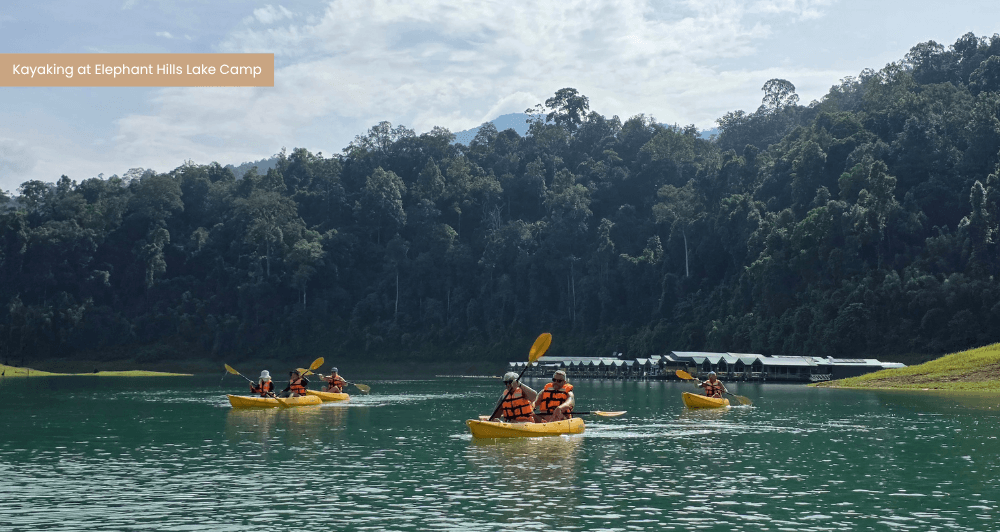
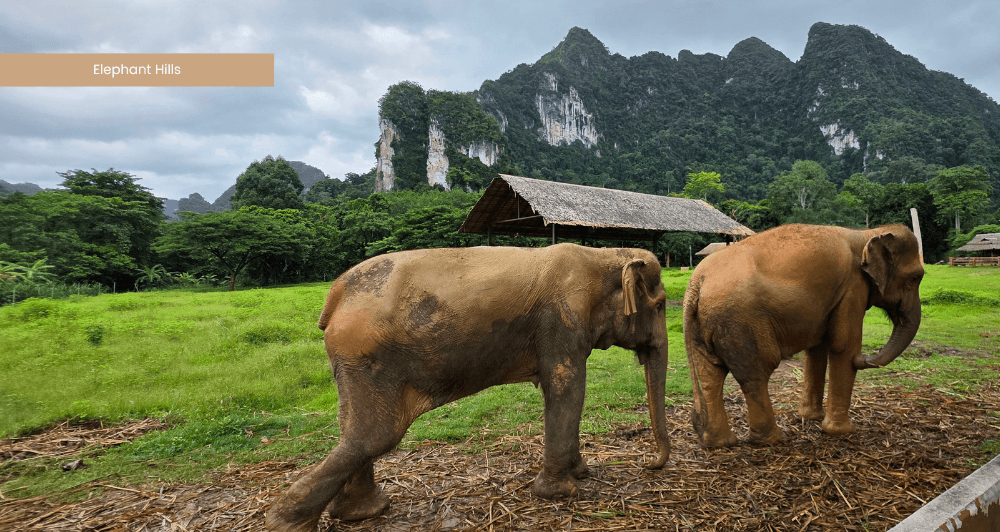
The itinerary here is very organised, with activities and meals always included. We saw the rescued and orphaned elephants (no riding has ever been allowed here, you just watch them in their new natural habitat), kayaked down the river and later moved to the Lake Camp. That journey involved a road transfer and a longboat, but the setting when you arrive is beautiful, and it was totally different from anywhere else we stayed.
At the Lake Camp, we kayaked, paddleboarded and took a more relaxed water-based approach rather than doing more trekking, but you can really be as busy or as relaxed as you want there.
From an ethical perspective, Elephant Hills performed very well. There was no riding, no direct feeding by hand, and no touching for entertainment. We helped to prepare the elephants’ food, but the animals themselves were never treated as props. When we were planning where we’d like to go, that really mattered for us. Even in work mode, authenticity and animal welfare have to come first when recommending wildlife experiences to clients.
For clients looking for genuine family adventure holidays, this was one of the clearest examples of how a more adventurous stay can work brilliantly when it's sandwiched between luxury hotels.
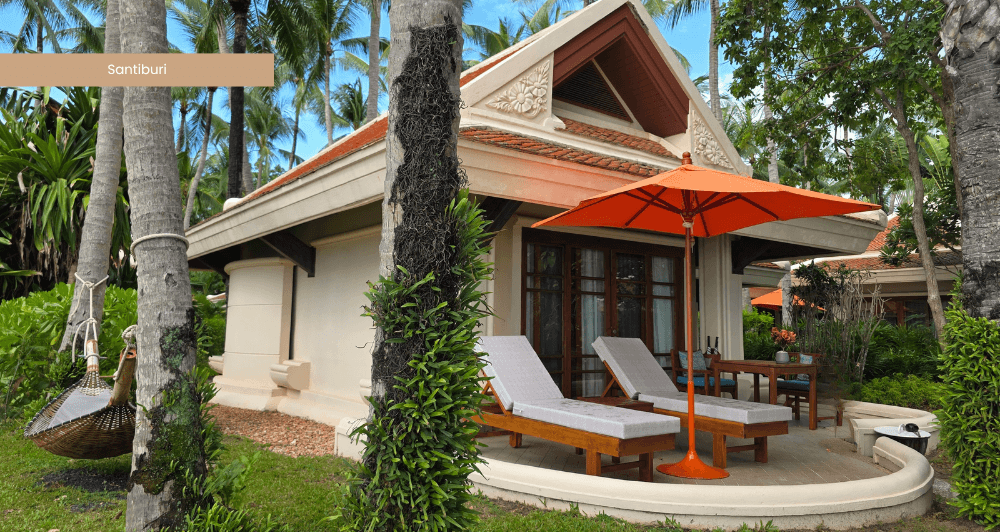
Koh Samui and Santiburi: Beach, Space and Family Comfort
The transfer from Elephant Hills to Koh Samui was one of the longer travel days, involving road, ferry and another transfer on the other side. I had been slightly concerned about it, but it was well broken up and worked smoothly.
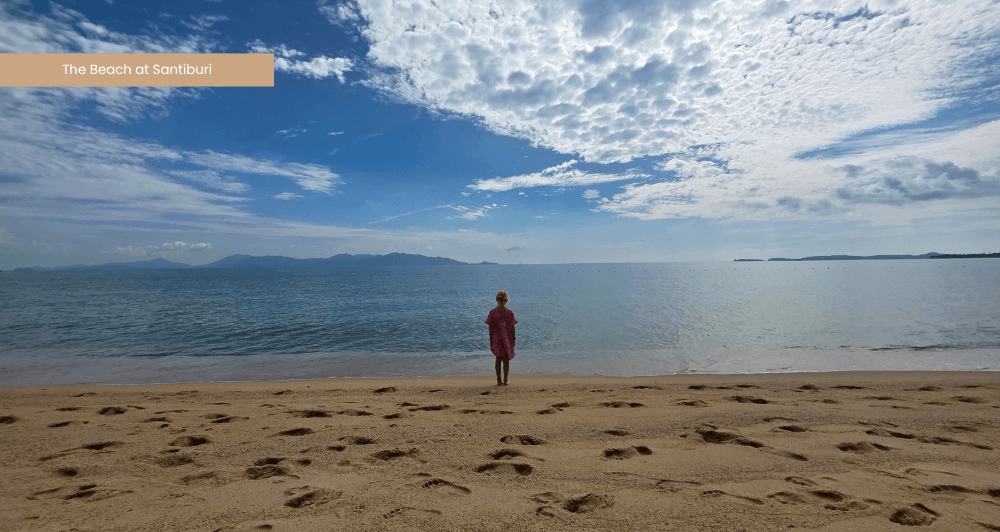
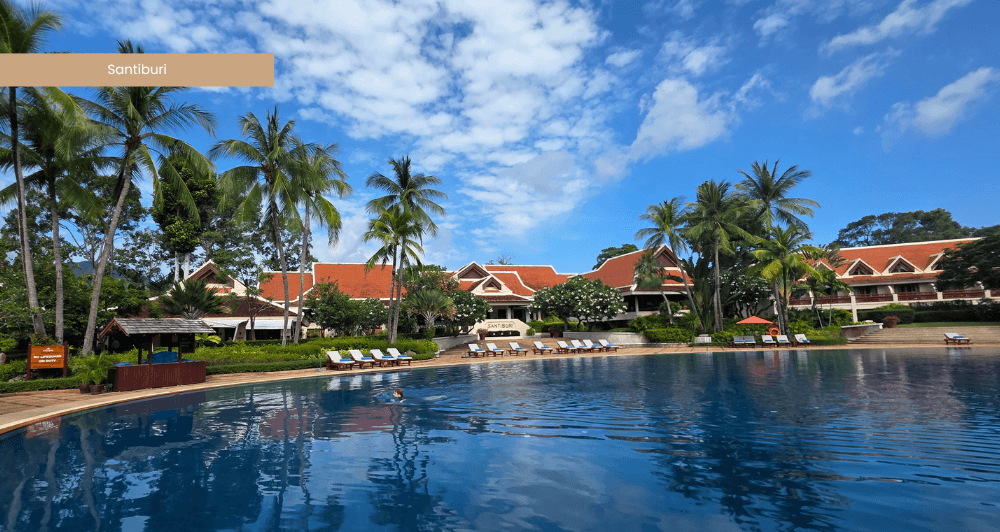
Santiburi in Koh Samui was another excellent family choice. It sits on a beautiful, quiet stretch of beach in the north of the island, with palm trees, restaurants by the sand and a relaxed atmosphere. The weather was glorious, which is one of the reasons Koh Samui works so well in the summer months compared with parts of western Thailand.
We stayed in a Beachfront Villa at Santiburi, so we could step straight out towards the beach. The resort is large enough to offer plenty - a 50 metre pool, a spa, an 18-hole golf course, and five dining spots - but it never felt difficult to move around. The pool area was one of the most beautiful we saw on the trip, and the kids’ club was excellent.
After the busier days at Elephant Hills, Santiburi gave us exactly what we needed: beach walks, pool time, good food, rest and space.
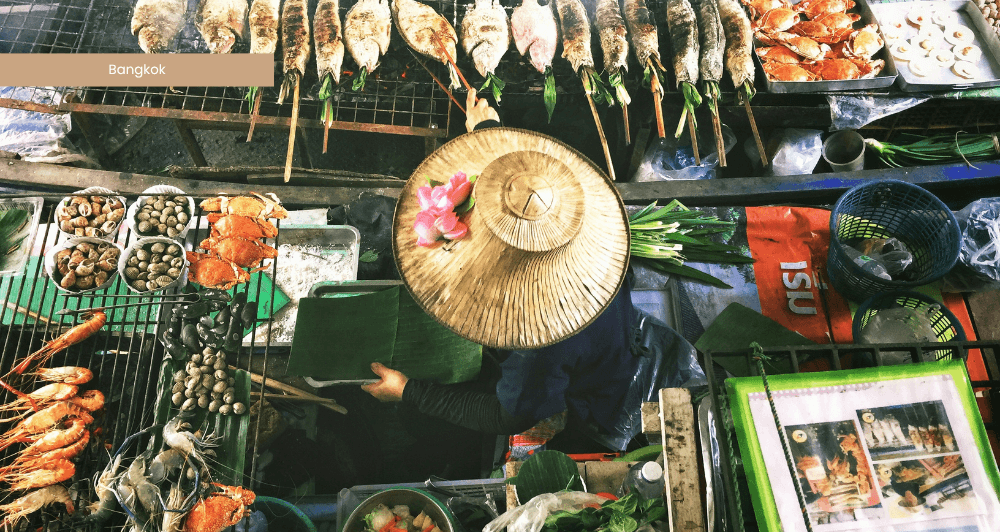
Bangkok: A Clever One-Night Stop
Bangkok was only a one-night stop, but it served its purpose perfectly. We stayed at Banyan Tree Bangkok because it is very well located, has a great rooftop bar and gave us the standard of hotel we wanted before an early flight to Sri Lanka.
We didn’t try to see all of Bangkok during this long haul family holiday. My wife and I had been before, and we knew our daughter probably wouldn’t have appreciated being taken around the Grand Palace at that point in the trip. She’s much more nature-focused, and this wasn’t the moment to force sightseeing for the sake of it.
Sometimes good planning is knowing what not to do.
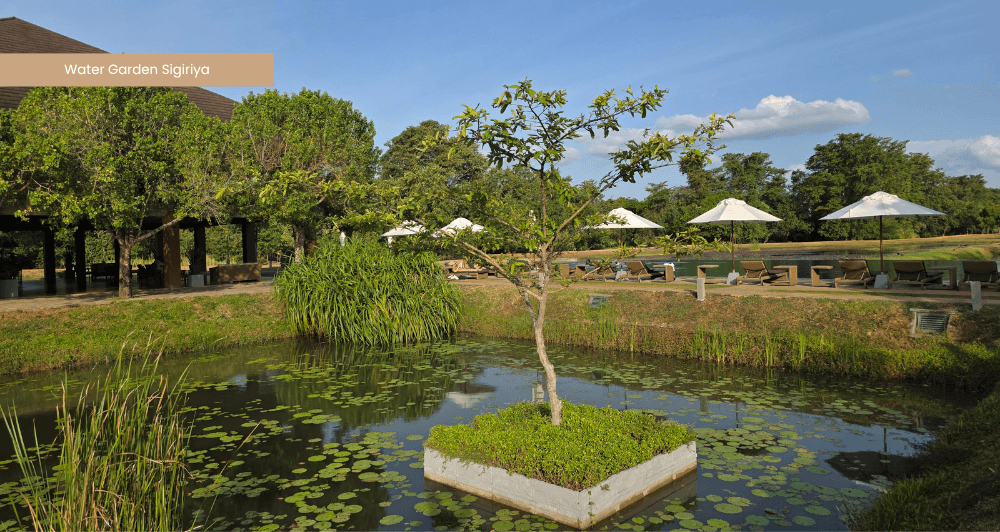
Sri Lanka: Back to a Destination We Love
Sri Lanka was one of the parts of the trip I was most looking forward to. My wife and I had been before, but not for around 15 years, and the country has changed a lot. The roads are better, and although some major road connections are still being developed, travel felt much smoother than I remembered.
We were met by our driver and guide, and they stayed with us for the week. Sri Lanka is such a family-friendly destination. The warmth towards children is so genuine, and our daughter was welcomed everywhere. It was lovely to see.
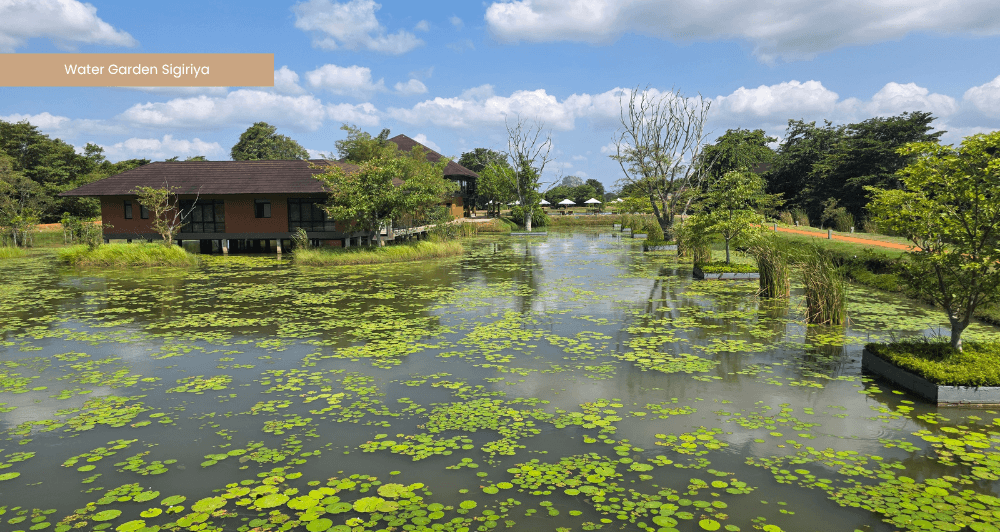
Our first stop was Water Garden Sigiriya, which was probably my wife’s favourite hotel of the whole trip. The villas look like they’re floating on water among lily pads, birdlife and wildlife, with Sigiriya Rock visible in the distance from the pool area. It’s peaceful, spacious and surrounded by nature, we absolutely loved it.
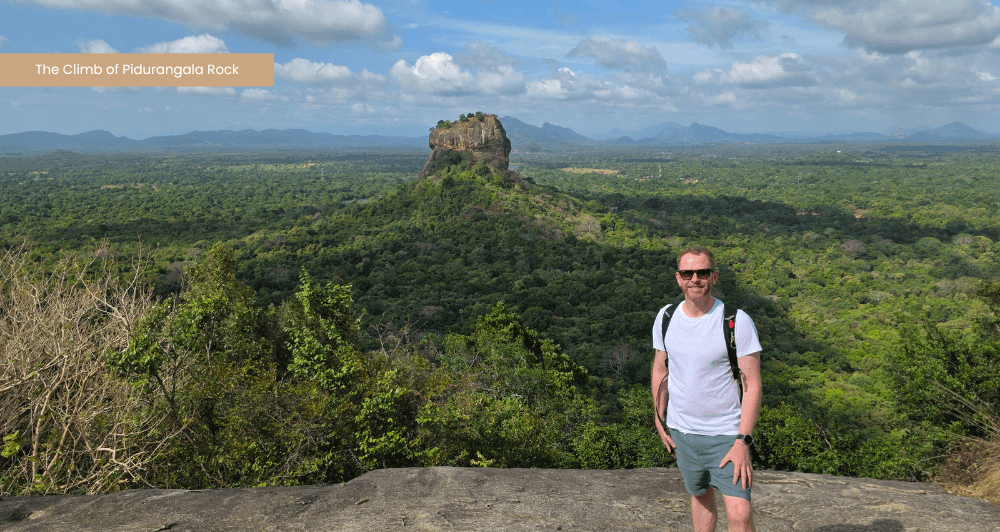
Rather than climbing Sigiriya rock again, which I had done before, I chose to climb Pidurangala to see Sigiriya from a different viewpoint. It was more challenging than Sigiriya in some ways, with rougher sections near the top, so I did it on my own with a guide while my wife and daughter stayed at the hotel. The morning was clear, the climb was hot, and the view across to Sigiriya was incredible – I’m so glad I did it.
I also took a tuk-tuk ride with my daughter around the local area. It was short and really simple, but it’s absolutely one of those moments she remembers. Sometimes it’s not the big-ticket activity that lands most with a child, sometimes it’s just a tuk-tuk ride and a bit of adventure, and that’s definitely worth remembering when planning a trip of this scale. Not everything needs to be a big excursion or adventure.
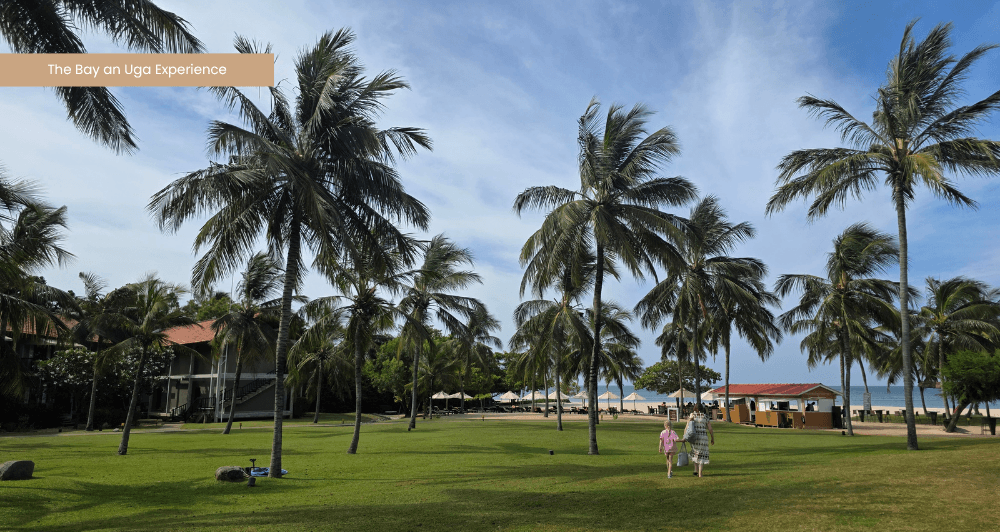
Uga Bay: East Coast Downtime
From Sigiriya, we travelled to Uga Bay on Sri Lanka’s east coast. In the summer months the east coast is a great choice, and we were very lucky with the weather.
The Bay an Uga Experience gave us the beach break we needed after a busier few days. It had a huge beach, lovely pool, very good food and the welcoming service you expect from Uga properties. It was hot, dry and relaxing, which turned out to be exactly the right pause before heading inland again to Gal Oya. For couples or older children visiting, there’s a fantastic ‘underground’ style spa, and it’s nearby to a lot of world-class scuba diving spots.
This was another example of the rhythm that made the trip work: activity, then beach; movement, then rest.
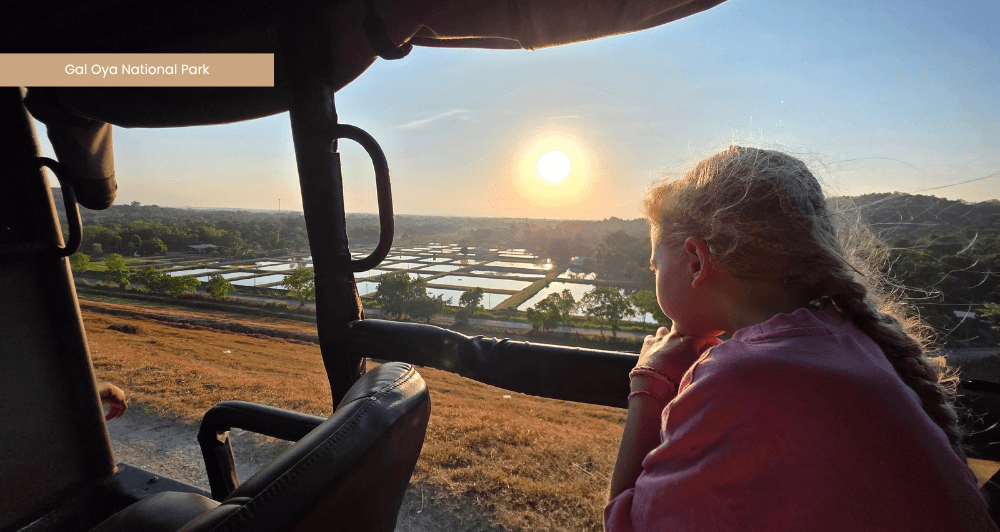
Gal Oya: Family Safari by Boat in Sri Lanka
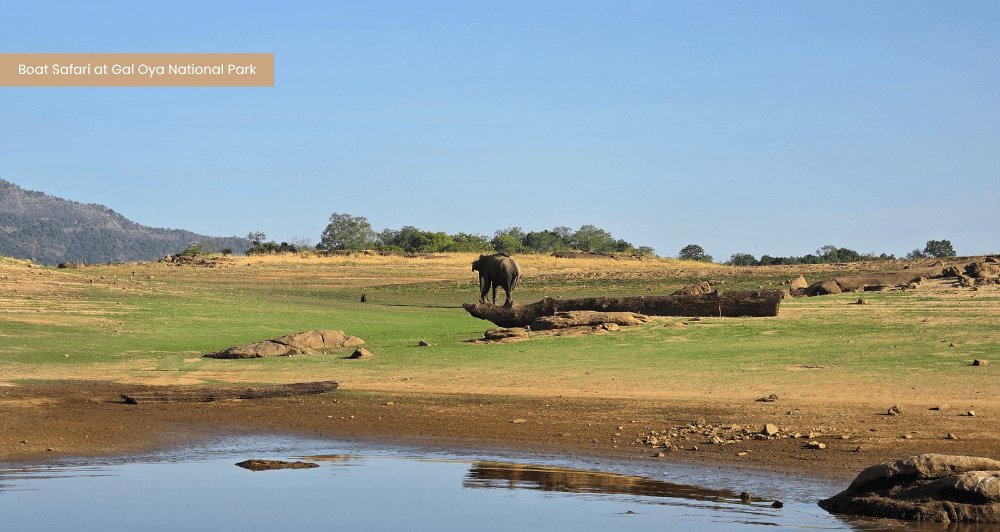
We chose Gal Oya because we wanted a different type of wildlife experience. We could have gone to Minneriya for elephants near Sigiriya, but Gal Oya is one of the most untouched and unseen corners of Sri Lanka, and it offers the chance to see elephants by boat, and sometimes even swimming between islands in the lake.
Even for the well-travelled, that is a very rare thing to witness.
We did see wild elephants, crocodiles and birdlife from the boat, although we were not lucky enough to see the elephants swimming. They had apparently been swimming the day before - typical! - but that is quite simply the nature of safari. You can’t control what animals do, I certainly don’t want to, and that is part of what makes it real.
Gal Oya Lodge itself felt deeply connected to nature – it’s an eco lodge and very sustainable. Our villa was set in the forest, with an outdoor bathroom and a real sense of being immersed in the environment. We also did a night walk by torchlight with a guide, which my daughter absolutely loved. It felt very adventurous, with just enough of a risk element to be exciting (while still being perfectly safe). I would imagine this will make up a good chunk of her stories to schoolmates when she returns.
For families who enjoy nature and don’t necessarily need a kids’ club at every stop, Sri Lanka is exceptional. It is also one of the destinations I would look at first for family adventure holidays, just because the experiences feel naturally adventurous rather than manufactured.
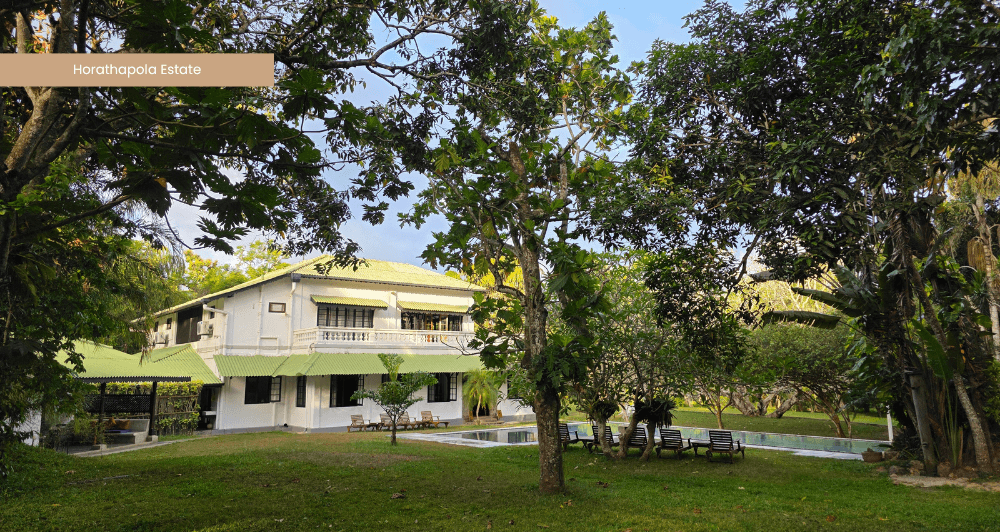
Horathapola: The One-Night Regret
Our final stop in Sri Lanka was Horathapola Estate, a 50 acre coconut estate outside Colombo. We stayed only one night, and that was a regret. It really deserved longer.
It’s a wonderful place to start or finish a Sri Lanka itinerary because it allows you to rest either before or after the longer drives. The estate has a lot of history, character, beautiful grounds, a lovely large pool and a 300-year-old Araliya tree in the main garden.
We stayed in a room close to the pool, which made it nice and easy to cool off before dinner. And the food was outstanding. Sri Lankan food was incredible throughout the trip, but Horathapola really spoiled us. If we’d had longer, we definitely would’ve got some bikes to explore the estate, and maybe even tried a cooking class to help us bring the knowledge of the dishes we loved home with us.
It was a lovely way to conclude our seven-night Sri Lanka journey before flying on to the Maldives.
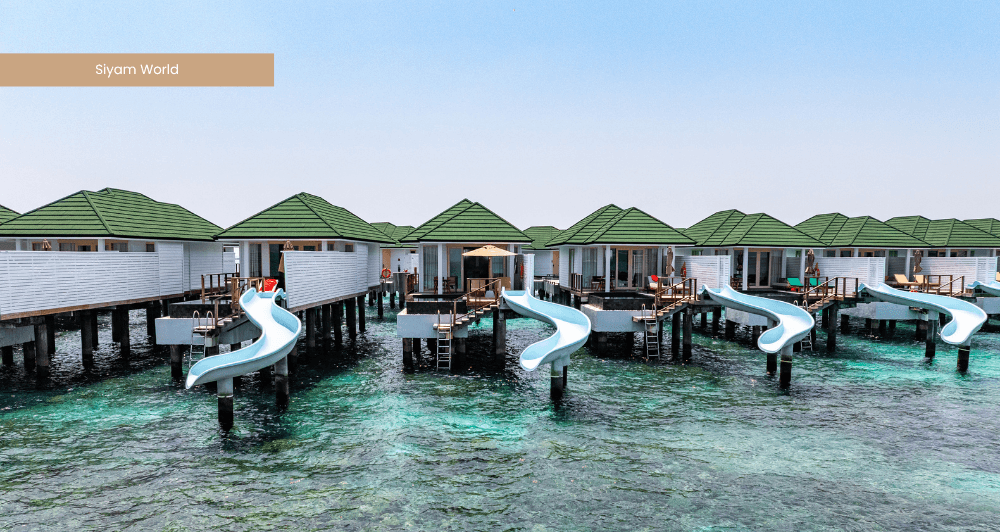
Siyam World Maldives: A Family-Friendly Finale
The Maldives was the perfect ending. After so much movement, five nights in one place felt like a real treat. It was the longest we stayed anywhere on the trip, and by that point we were actually very ready to decompress.
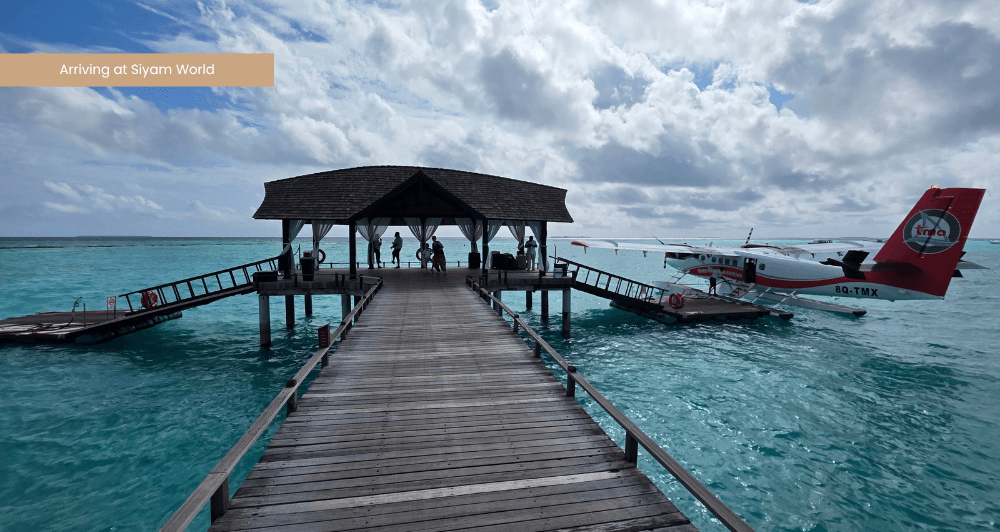
The seaplane transfer was a big part of the experience – my wife had never been to the Maldives before, and my daughter had never been on a seaplane, so just the journey to the resort felt incredibly exciting. And Siyam World - with their dedicated lounge in the seaplane terminal - made the transition from international arrival to seaplane to resort feel seamless, I was very impressed by this.
Siyam World is a large island and not necessarily the most traditionally Maldivian in style because of its scale, but for families it works brilliantly. There is so much to do, it’s almost unbelievable that you’re on a remote island in the middle of the Indian Ocean. There’s a wide choice of restaurants, bars with different themes, water sports, an inflatable water park, a horse ranch, endless activities, and updates sent by WhatsApp so you always know what is happening across the island.
The all-inclusive concept is very strong, with access to many à la carte restaurants and relatively limited restrictions compared with some resorts. That makes a big difference over five nights – you don’t want to be concerned about where or what you can eat.
We stayed in an overwater villa with a slide that went straight down into the sea, which was a huge part of the fun. It’s the kind of room category that makes children light up, but if we are honest, adults enjoy it just as much. The villa was very spacious, the setting was beautiful and the slide added a playful element that made the stay memorable.
Siyam World is very family-oriented, so - although there are some bars and restaurants around the island catered more to adults - in my opinion, it would not be the right choice for someone seeking a small, quiet, adults-only atmosphere. But for families wanting the Maldives with energy, choice and fun, it absolutely delivers.
It was also a reminder that a long haul family holiday doesn’t have to mean relentless sightseeing. We very deliberately made the final few nights of our trip slower, giving us time to enjoy the resort and simply be together.
The Planning & the Motivation
As Head of Product at Destinology, I spend much of my working life looking at hotels, destinations and itineraries through a client's eyes. This trip gave me the chance to test that thinking in a very different way: as a dad travelling with an eight-year-old.
It took a lot of planning. We started working on it around a year in advance, partly to give us time to save, partly to make sure I could take the time out of work, and partly because we wanted to make the most of the school summer holidays. Our previous family holidays had mostly been shorter breaks - ten days in Dubai here, a week in Turkey there - so this was a very different scale of trip.
There was also the question of whether our daughter was ready for it. She is full of energy, loves animals, enjoys adventure and has always had a bit of a risk-taking streak, but long-haul flying had not always been her favourite thing. The thought of taking her on a journey involving long flights, multiple countries, transfers, wildlife, cities, beaches and safaris was exciting, but I would be lying if I said it didn’t feel slightly daunting at first.
But eight is a really special age to travel with a child. They still see everything as new and exciting. They are curious, open, and easily amazed by the world around them. Before you know it, they’re older and may not want to travel with you in quite the same way, so this felt like a precious window of time. My wife and I have both travelled a lot over the years, and we wanted to give our daughter the chance to see some of the wondrous things we have seen, but to experience them for the first time through her eyes as well.
That became the heart of this long haul family holiday – its driving force.
Building the Route
The first decision was to get straight out to Asia. We considered breaking the journey, but in the end decided to just go for it and fly to Singapore. I had not been to Singapore for around 20 years, so I was intrigued to see how much it had changed. It also felt like a very easy introduction to Asia: safe, clean, simple to get around and full of things to do without being overwhelming.
From there, the idea was to create a rhythm that we could all easily adopt. Busy, then relaxed. City, then nature. Wildlife, then beach. Activity, then downtime. I knew five weeks purely on a beach wouldn’t work for us, and certainly wouldn’t work for our daughter. She needed variety, movement and interest. At the same time, we did not want to exhaust ourselves by trying to do everything in every place.
So the trip became a series of contrasts.
Singapore gave us the city start. From there, we flew to Kuching in Sarawak, the western side of Malaysian Borneo, before moving on to Brunei to spend time with friends. We then travelled to Kota Kinabalu in Sabah, on the eastern side of Borneo, before heading out by speedboat to Gaya Island.
After Borneo, we flew via Kuala Lumpur to Phuket and transferred up to Khao Lak for a beach break before Elephant Hills and Khao Sok National Park. From there, we travelled by road, boat and ferry to Koh Samui, before a one-night stop in Bangkok to connect onwards to Sri Lanka. Sri Lanka gave us a week of touring, wildlife, countryside and coast, before we ended with five nights in the Maldives.
Looking back, the route worked because each part felt like a new chapter. It didn’t feel like one long five-week holiday in the same place. It felt more like several holidays joined together, and each one was unique. That is what made it work so well as a long haul family holiday – there was always something different around the corner.
Avoiding Travel Fatigue on a Multi-Centre Family Holiday
Multi-stop holidays can very easily become tiring. There were a lot of moving parts on this trip: regional flights, road transfers, speedboats, ferries, seaplanes, airport pickups and early starts, but the distances between most places were manageable, and the variety kept the energy up.
The key was not trying to overfill each day. We planned the structure carefully, but once we were in each destination, we kept the daily expectations quite loose. There were certain fixed points, of course - flights, transfers, wildlife experiences - but outside of this, we didn’t put pressure on ourselves to see absolutely everything.
And that was important.
When you’re travelling with a child, and especially on a long trip, you have to let the itinerary breathe. Some days were about exploring, some days were all about swimming to my daughter’s delight), some days were about doing very little other than having lunch, wandering around, and letting the day simply happen. This is one of the biggest lessons I would pass on to anyone planning a long haul family holiday.
We also made sure there was always something to look forward to. A pool at the end of a city day, a beach break after wildlife, a few nights somewhere quieter after a travel day. That routine of being busy and then relaxing kept the whole journey exciting without it becoming overwhelming.
For families considering family adventure holidays, I think this is particularly important. Adventure doesn’t mean every. single. day. has to be an adventure. Sometimes the best way to enjoy the next big experience is to spend an afternoon doing absolutely nothing.
Making the Transitions Work
One of the biggest lessons from this trip is that organisation genuinely matters. On a journey like this, you have to know where you are going, when you are being collected, how long the journey should take and who is looking after you on the ground.
We were very fortunate to have exceptionally good local partners throughout the trip. At no point did the transitions really fall down. We knew when flights were leaving, when transfers were arriving and how the next stage was supposed to work. We had also done our own research, which I think is very important, because it gives you confidence and context.
There is quite a lot of reconfirming involved in a trip like this. For some people, that might feel tiresome, but for us it kept everything on track. It meant we could sleep easy knowing someone was coming at a certain time the next morning.
You also have to stay organised while you are already on holiday. Entry cards, visas and destination forms can sometimes only be completed a few days before arrival. The Maldives, for example, has requirements that need attention shortly before travel. On a long trip, that means taking the odd hour out during the holiday to organise the next stage.
Granted, it’s not the glamorous side of travel, but it’s what makes the glamorous side possible.
Travelling With an Eight-Year-Old
Travelling for five weeks with a child is a big undertaking, but children are often much more adaptable than we give them credit for.
For our daughter, the trip worked because we tried to keep her at the centre of it. We built in things we knew she would enjoy: wildlife, pools, beaches, boats, different modes of transport, a bit of adventure and enough downtime to recover. In lots of ways, it had all the ingredients of the family adventure holidays we would normally recommend to clients looking for more than just a beach escape.
We took games, books and a tablet. On travel days, we didn’t restrict the tablet too much as long haul flights and car journeys can be a bit boring for everyone. But on pool days or activity days, it disappeared completely, and that balance worked well. Long transfers were helped by games, conversation, snacks and the occasional bit of screen time, but once we arrived somewhere, she was - very willingly - straight back into the destination.
The most crucial time of every day, despite all the wonderful things we did, was proper downtime. After a busy morning or a city tour, we would come back to the hotel and go to the pool – that became her reset button. Wherever we went, we tried to make sure there was a pool… that saved us more than once. She always had somewhere to retreat to and play and just be an eight year old child.
I don’t think that she could possibly choose a single standout highlight if I asked, because everything was new. In fact, when we do ask her, the answer always changes. Sometimes it’s the orangutans in Kuching, sometimes it’s the crocodile she saw, other times it’s the speedboat trip, the tuk-tuk ride in Sri Lanka, the elephant walking down the road, the beaches, the pools or the water villa slide in the Maldives.
But actually, maybe that is the point? For her, it might simply all blend together into one big colourful memory of animals, water, adventure and being with us.
Was This Long Haul Family Holiday Suitable for an Eight-Year-Old?
Yes – but it worked because we built the itinerary around her rather than taking an adult itinerary and adding a child into it.
The wildlife helped enormously. So did the pools. So did having different forms of transport, from speedboats and ferries to tuk-tuks and seaplanes. She was very rarely just sitting in a car wondering when we were going to arrive.
We also accepted that she wouldn’t enjoy everything we had planned, or some of the things we enjoyed, and that meant choosing our moments carefully and understanding when to leave something for another trip. The Grand Palace in Bangkok, for example, was not going to add much value after everything else she had already experienced.
The lesson for me was that travelling with children doesn’t mean making everything childish, it means making sure the itinerary has enough things that genuinely interest them.
The Luxury Touches That Mattered
Because this was such a special trip, we made certain choices to make it feel elevated. We prioritised larger rooms, space, pools, villas and experiences that would give us comfort throughout the journey.
That of course doesn’t mean every family needs to do it this way, but for us, this trip wasn’t something we do often, and we wanted to make it memorable. Having a private pool, a beachfront villa, a spacious suite or a water villa with a slide genuinely changed how we used the hotels. It gave us space to rest, recover and enjoy each property rather than just sleeping there.
The small luxury touches in terms of logistics also mattered: the seamless transfers, the friendly local guides, the thoughtful service, the ability to reconfirm plans, the restaurants, the beach locations, the wildlife experiences done properly and the feeling that the whole trip had been stitched together carefully.
As Head of Product, I looked at the trip through two lenses: as a dad and as someone responsible for understanding what our clients experience. As a dad, I wanted the trip to work for my wife and daughter. As Head of Product, I was constantly observing how the hotels, destinations, transfers and local partners delivered on the ground.
That insight is invaluable. It allows me to come back not just with knowledge, but with lived experience that can support our Personal Travel Concierges, and help shape better recommendations for clients.
How Many Destinations Should You Visit on a Long Haul Family Holiday?
All in all, we visited six broad destinations across five weeks, although the itinerary included several different bases within Borneo, Thailand and Sri Lanka. Would I suggest every family does the same? Absolutely not.
The number of destinations matters less than the relationship between them. If a two-hour flight takes you somewhere completely different, adds a new experience and is followed by several nights in one place, it can work beautifully and can feel fairly easy. If you're changing hotels every night just to tick another box, it can very quickly become exhausting.
Our route worked because we were deliberate about the transitions. During the planning stages, we didn't just look at a map and decide we could fit everything in. We carefully considered travel times, what our daughter would enjoy, where we could slow down and what each destination would add.
For families planning a long haul family holiday, I would always recommend thinking in terms of experiences rather than countries. Ask what you want your children to remember, then build the route around those moments.
Who is This Type of Trip Right For?
Would I recommend this exact itinerary? Yes, but not to everyone.
This was a big trip. We moved a lot, and although the route worked brilliantly for us, it suited our style of travel. My wife and I are experienced travellers, and our daughter adapted very well. For a family that enjoys adventure, wildlife, variety and doesn’t mind being on the move, it’s a fantastic way to see a huge amount in one journey.
For families drawn to family adventure holidays, the combination of wildlife, boats, rainforest, safari, beaches and different cultures gives you plenty to get excited about.
For others, I would slow it down. I might recommend doing one or two countries rather than several, staying longer in each place and reducing the number of transitions. Not everyone wants to feel like they are constantly moving, and that’s absolutely fine. It’s what makes my job so exciting.
The important thing is to build the itinerary around the traveller, not around a map or what they think they should be doing.
If you have the time, experience and appetite for adventure, a journey like this can be extraordinary. But if you want a gentler pace, the same ingredients can be used in a more relaxed way, and our Personal Travel Concierges here at Destinology are exceptional at putting together the perfect trip.
My Golden Rule for Complex Itineraries
For me, the one golden rule is simple: be organised.
That is where Destinology and our local partners make such a difference. Once the structure is right, the timings are sensible, the transfers are confirmed and the right people are supporting you on the ground, a complicated itinerary can feel easy.
You still need flexibility, you still need to accept that animals may not appear when you want them to, that travel days can be long and that not every moment needs to be planned, but good organisation gives you the confidence to relax into the journey.
Know where you are going. Know what is coming next. Build in space. Keep it interesting. And match the pace to the people travelling.
Final Reflections
This was one of the best holidays I have ever been on. It’s hard to pick a favourite part because every destination gave us something totally different. Singapore gave us an exciting start. Borneo gave us orangutans, rainforest and island adventure. Thailand gave us beaches, elephants, lake camps and family-friendly luxury. Sri Lanka gave us warmth, wildlife, culture and some incredible boutique stays. The Maldives gave us the perfect ending.
There were moments when the pace was challenging, but the changes of scenery kept everything fresh. We were busy, then relaxed. Exploring, then swimming. Travelling, then stopping. That rhythm suited us, and it suited our energetic eight-year-old.
More than anything, the trip gave us time together. It gave our daughter the chance to see parts of the world she had never seen before, and it gave us the chance to see those places again through her eyes. That was probably the biggest highlight of all. We’ll remember it forever.
For the right family, long haul family holidays or family adventure holidays are about giving children stories they will still be telling years later – the orangutans emerging from the dense trees, the tuk-tuk ride that feels absolutely wild to a child, the amusement of an elephant on the road, the jaw-dropping ride seaplane over the Maldives.
Because trips like this do not come around often. And when they do, it’s all in the planning.
Call our Personal Travel Concierges today to start creating yours.
Words by Richard Turnbull, Head of Product & Tailor-Made Holidays at Destinology.
FAQs
What is the best age for a long haul family holiday?
There is no single perfect age, but eight worked brilliantly for us. Our daughter was old enough to understand where we were going and get excited about the experiences, while still being curious enough to find almost everything new. She was also adaptable enough to cope with different hotels, transport and routines.
Is five weeks too long to travel with a child?
Not necessarily. Five weeks sounds enormous on paper, but our daughter adapted really very quickly. The important thing was that we didn't treat every day as a sightseeing day. We built in pools, beaches, quieter hotels and downtime between the bigger experiences, which gave everyone a chance to reset.
Which destinations are best for family adventure holidays?
For our trip, Borneo, Thailand and Sri Lanka were particularly strong because the adventure came naturally from the destination. In Borneo, we had orangutans and rainforest. Thailand gave us Elephant Hills, kayaking and Lake Camp. Sri Lanka brought safari, night walks and tuk-tuk rides. The Maldives then provided a very different kind of fun at the end.
Is Borneo suitable for an eight-year-old?
Yes, particularly for children who enjoy animals and nature. Our daughter loved the orangutans at Semenggoh, the rainforest walks on Gaya Island and seeing turtles at the marine centre. The key is choosing experiences that are age-appropriate and balancing them with comfortable accommodation and plenty of time for playing.
Is Sri Lanka good for a family holiday?
Very much so. The warmth towards children is very genuine, and there is an enormous variety of experiences within a relatively manageable journey. We combined boutique hotels, beaches, wildlife, countryside, safari and cultural experiences, while having the flexibility of a private driver and guide.
How do you avoid travel fatigue on a multi-centre family holiday?
Make sure to build in recovery time during the planning stage. Don't make every day an excursion, and don't be afraid to choose a hotel partly because it has a great pool. We also made sure that after a particularly busy or complicated travel day, the next stage gave us somewhere to slow down.
How many destinations should you visit on a family holiday?
It depends entirely on the family. Everyone is so different. We covered a huge amount in five weeks, but we are experienced travellers and knew our daughter would adapt very well. For younger families, I would recommend fewer destinations with longer stays. For those with older children, you could probably make the trip even longer. The important thing is that the itinerary works as a whole rather than simply looking impressive on a map.
Is the Maldives suitable for children?
The Maldives is perfect for children, although the right resort makes all the difference. We chose Siyam World because it offered plenty of activities, restaurants, water sports and space, as well as an overwater villa with a slide. For families wanting a quieter, smaller resort, I would recommend a very different style of property.
What is the most important thing to plan for a long haul family holiday?
For me, the transitions are so important during a long haul family holiday. The hotels themselves are the easy bit, but you need to consider how you get from one place to the next, how long each journey takes, whether the children have enough downtime and whether someone reliable is looking after you on the ground. Get those elements right and the rest of the trip becomes considerably easier.
Related Articles
You May Also Like





Why Destinology?






Our Travel Partners
Sign up to receive
exclusive offers by post.
Join our postal mailing list to unlock a world of exclusive travel content. From special offers and VIP access to new launches, to expert advice and exciting ideas for your next getaway, we’ve got holiday inspiration covered. Start your Destinology journey today.
Sign Up

Destinations

TRAVEL AWARE – PREPARING FOR SAFE AND HEALTHY TRAVEL ABROAD
The Foreign, Commonwealth & Development Office (FCDO) provide the latest travel advice by country including safety and security, entry requirements, travel warnings and health. For the latest FCDO advice please refer to travelaware.campaign.gov.uk
Current travel health information can be found by visiting travelhealthpro.org.uk/ a resource set up by the Department of Health. The advice can change on all sites so please check regularly for updates.
