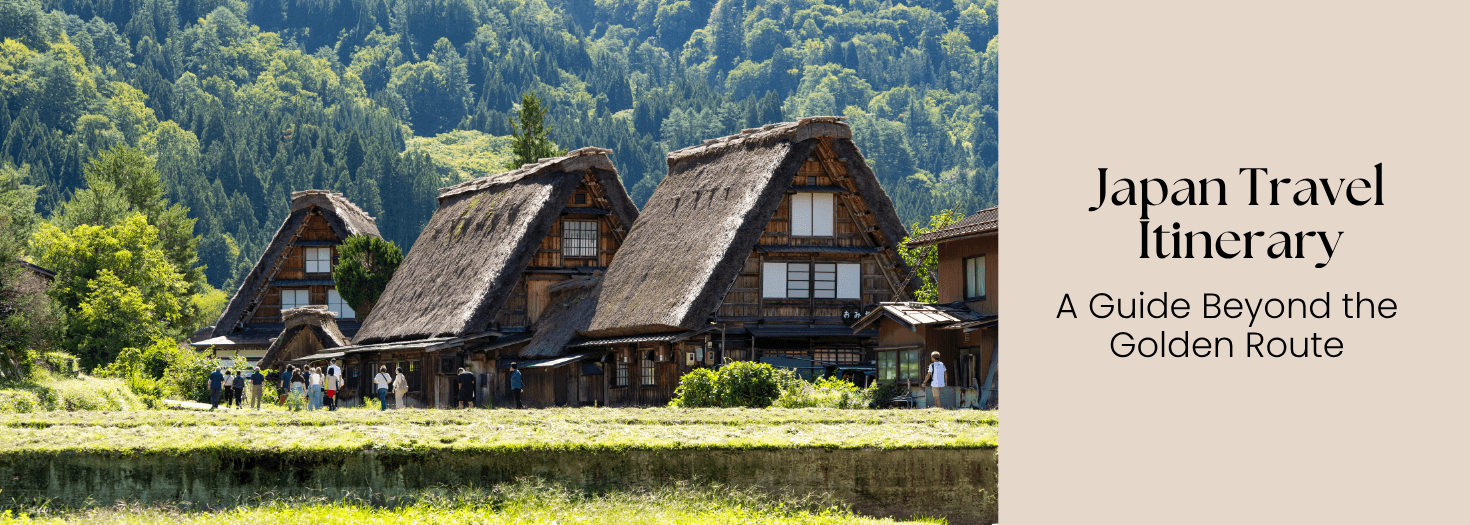
Japan Travel Itinerary: A Guide Beyond the Golden Route
Table of Contents
- Our Japan Travel Itinerary at a Glance
- Why Go Beyond Japan’s Golden Route?
- The Things to Do in Japan That We’ll Remember Most
- 1. Watching Cormorant Fishing on the Nagara River
- 2. Meeting the Artisans Behind Japan’s Traditional Crafts
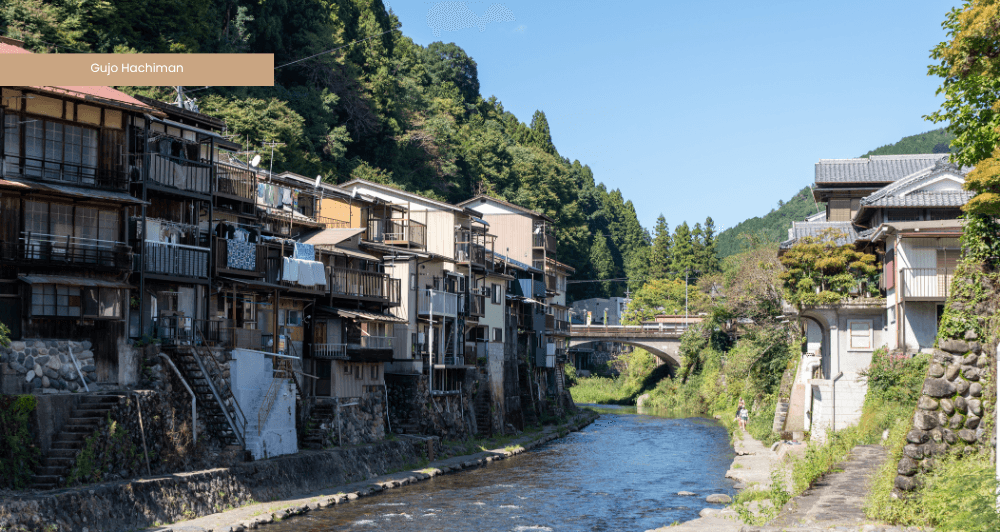
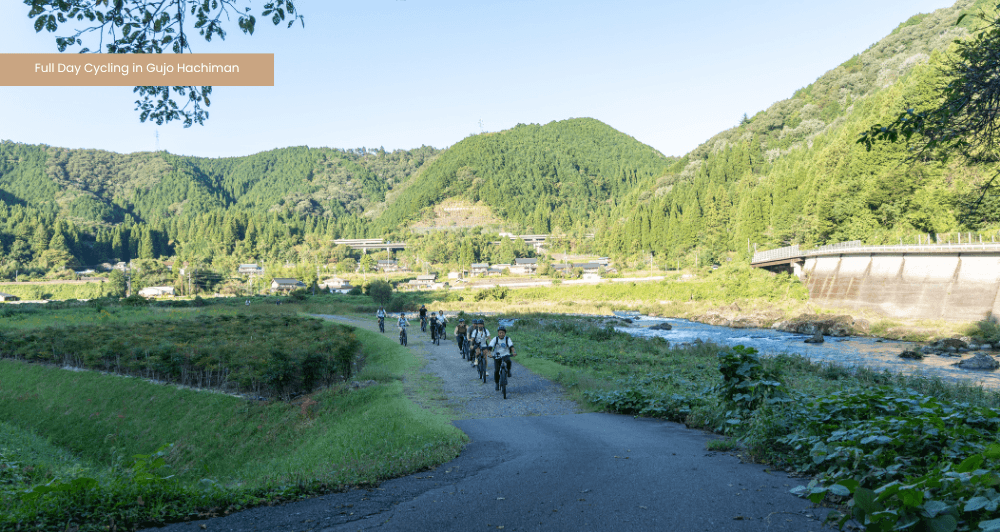
- 3. Exploring Gujo Hachiman and Its Surrounding Countryside
- 4. Joining the Circle at Gujo Odori
- 5. Stepping Inside a Traditional Farmhouse in Shirakawago
- 6. Taking Part in a Tea Ceremony in Kanazawa
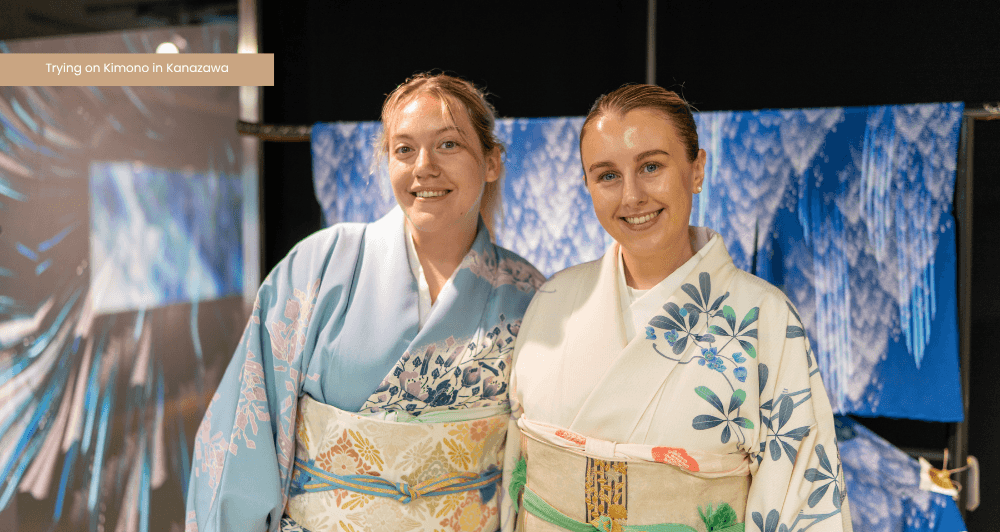
- 7. Discovering the Work Behind a Kimono
- 8. Bar-Hopping Our Way Around Kanazawa
- Where Should You Stay On a Luxury Japan Holiday?
- How Easy Is It to Travel Around Japan?
- Who Would We Recommend This Japan Travel Itinerary To?
- When Is the Best Time to Visit Japan?
- Our advice for planning a Japan holiday
- FAQs
Japan had been on my travel wish list for a long while now – it was actually a trip I’d earmarked for a combined 30th trip with my partner, but that’ll need a rethink now... By the time the opportunity came along, my TikTok algorithm had pretty much made the decision for me. Everywhere I looked, there was another temple, another teeny tiny ramen bar or another highly recommended shopping district I wanted to visit. Add my love of art, history and food to the mix, and I was never, ever going to turn this Japan travel itinerary down.
Alongside Amelia, one of our Personal Travel Concierges here at Destinology, I spent 12 nights exploring Japan on a trip organised by Essential Japan, with the tourism organisations in Nagaragawa and Kanazawa guiding us through some of the country's quieter corners. Aside from a (very) brief introduction to Tokyo at the start, our itinerary took us far beyond the Golden Route, into the countryside of Gifu and the Nagara River region, the historic streets of Gujo Hachiman and the beautiful gardens and craft traditions of Kanazawa. These are places many international visitors rarely reach, particularly on a first trip to Japan. We met artisans keeping centuries-old crafts alive, watched traditional cormorant fishing after dark and found ourselves dancing with locals in Gujo Hachiman, with some brilliant meals along the way – including a surprisingly excellent Neapolitan pizza in the Japanese countryside. We did eventually make it to the buzz of Kyoto and Osaka, but those extra nights were ones Amelia and I chose to add ourselves, keen to experience a few of Japan's best-known cities as first-time visitors, too.
For Amelia, travelling as a Personal Travel Concierge meant seeing destinations she can recommend to clients with a much better understanding of what makes each one special. For me, it was a chance to experience somewhere I'd been curious about for ages, and to share with our clients just how much there is to Japan beyond the places everyone talks about.
If you're planning a Japan holiday and wondering whether to stick to the classic Golden Route or venture further afield, here's what we thought of the places we visited, the experiences we loved and the things we'd tell our clients before they go.
Our Japan Travel Itinerary at a Glance
Our trip ran from 26th September to 8th October 2026, including 10 nights on the ground in Japan and 2 nights for travelling. This covered the main hosted itinerary with extra time in Kyoto and Osaka, too.
- Tokyo: A brief introduction to Japan's energetic capital. As the trip wasn’t focused on the cities as I’ve mentioned, we didn’t see too much here… so we’ve got an excellent excuse to return.
- Inuyama and Nagaragawa: A historic castle town, riverside scenery, traditional crafts and cormorant fishing.
- Gujo Hachiman: Winding streets, clear waterways, local food and the tradition of Gujo Odori.
- The Gifu countryside: Mountain shrines, waterfalls, cycling routes and a refreshing dip in the Nagara River.
- Shirakawago: Traditional gassho-zukuri farmhouses and a glimpse into rural Japanese life.
- Kanazawa: Beautiful gardens, historic teahouses, tea ceremonies and hands-on artisan experiences.
- Kyoto: Temples, atmospheric streets, food markets and a very memorable luxury hotel stay.
- Osaka: Neon-lit streets, shopping and an evening food tour that took us to some wonderfully local spots.
The hosts organised the main itinerary, with Essential Japan taking us through destinations we might not have thought to include ourselves. We then extended our trip to spend additional time in Kyoto and Osaka.
That combination worked so well. We had the chance to explore quieter parts of the country before finishing with two of Japan's best-known cities. If you're collecting Japan itinerary ideas, I'd definitely consider a similar balance rather than spending the entire trip moving between the headline destinations.
Why Go Beyond Japan’s Golden Route?
Tokyo, Kyoto and Osaka are popular for good reason. They're exciting, absolutely packed full of things to see and do, and each gives you a different perspective on Japan. But one of our biggest takeaways from this trip - and we voiced it on multiple occasions - was how much you’ll miss if you stick exclusively to those familiar names.
In Nagaragawa and Gujo Hachiman, both located in Gifu Prefecture in central Japan, international visitors were few and far between – in fact, we make up as low as 3% of annual guests. For this section of the trip, we were often the only Western visitors in the entire area, but the locals we met were visibly very proud of their towns and keen to share their traditions, whether that meant explaining a centuries-old craft or introducing us to a local dish.
It felt like getting a little closer to everyday life in Japan. We weren't just visiting somewhere to buy a ticket to a landmark attraction, take a photograph and move on; we were learning why a particular tradition mattered, how a craft was first fashioned or what made the local food different.
Kanazawa was another highlight. I hadn't even heard of it until Richard, our Head of Product & Tailor-Made Holidays, returned from his own visit earlier in the year but, alongside Gujo Hachiman, it quickly became one of our favourite destinations, with its old wooden streets, gardens, teahouses and craft heritage. Affectionately known as ‘Little Kyoto’ (and the photos will reveal why it has earned that nickname), it had plenty to explore but felt calmer than Kyoto and Tokyo.
For anyone searching for unknown destinations in Japan, I'd put both Kanazawa and Gujo Hachiman on the list. They're very different places, but each gave us a side of the country we wouldn't have experienced in quite the same way on the usual route.
The Things to Do in Japan That We’ll Remember Most
There were so many highlights that choosing favourites really does feel a little unfair. These are the experiences that have stayed with us, from getting involved in local traditions to discovering places we would already love to return to. Some were organised specially by the tourism organisations that guided us, but almost all are open to international tourists upon request.
1. Watching Cormorant Fishing on the Nagara River
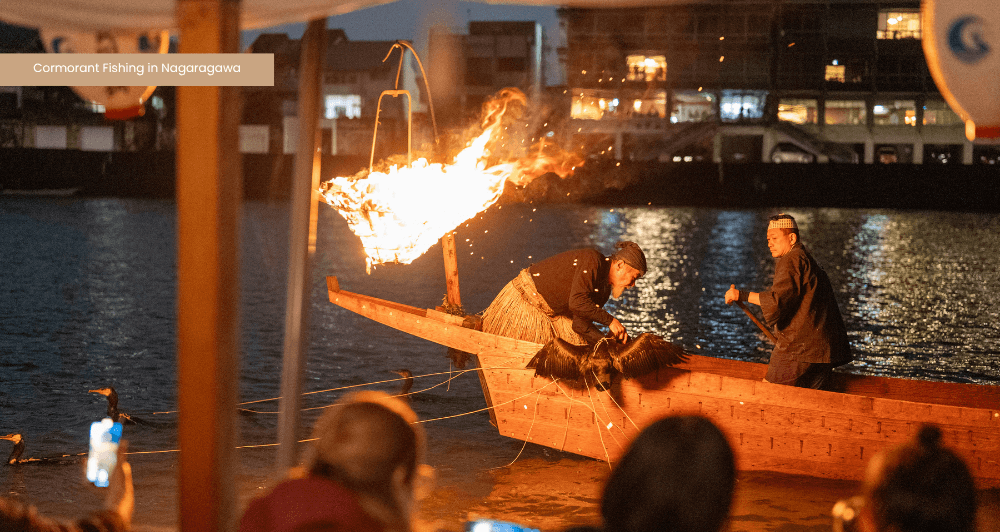
One evening we boarded a boat on the Nagara River to watch traditional cormorant fishing, known locally as ukai. Rainy weather had already seen us taking shelter in the dedicated museum, where we learned that the practice has a long history in the Gifu region. There are six cormorant fishermen that come from the six local cormorant fisher families, and watching them navigate the waters in their illuminated fishing boats after dark was quite something.
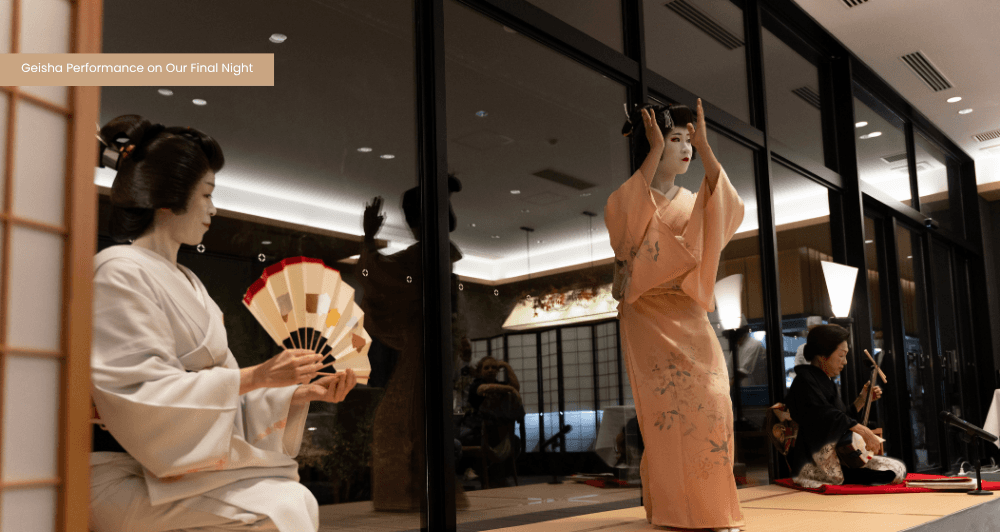
Dinner was served on board, and we also enjoyed an introduction to local geisha culture. It was atmospheric without feeling artificial or orchestrated, and seeing a tradition that has continued for centuries gave us a real sense of place. It was a very fitting start to the trip.
The region is also known for ayu, or sweetfish, which are caught by the cormorants in its rivers. Trying food connected so directly to the landscape taught us that Japanese cuisine changes considerably from one region to another.
A note on cormorant welfare: To Western eyes, cormorant fishing can initially look unkind to the birds, particularly when you see them working on the river. But meeting the families who care for them offers a very different perspective. On the Nagara River, cormorants live with their handlers, known as usho, in dedicated aviaries and bathing areas beside the family homes. They're cared for throughout the year and their handlers monitor their health closely and treat them as working companions. The bond runs incredibly deep, so the birds are mourned when they die and memorial ceremonies are held in their honour. While wild Japanese cormorants typically live around 7 to 8 years, those cared for by fishing families commonly live for 15 to 20 years, with some even reaching 25 or 30. Seeing the care and commitment involved gave us a much greater understanding of a tradition that has continued for more than 1,300 years.
2. Meeting the Artisans Behind Japan’s Traditional Crafts
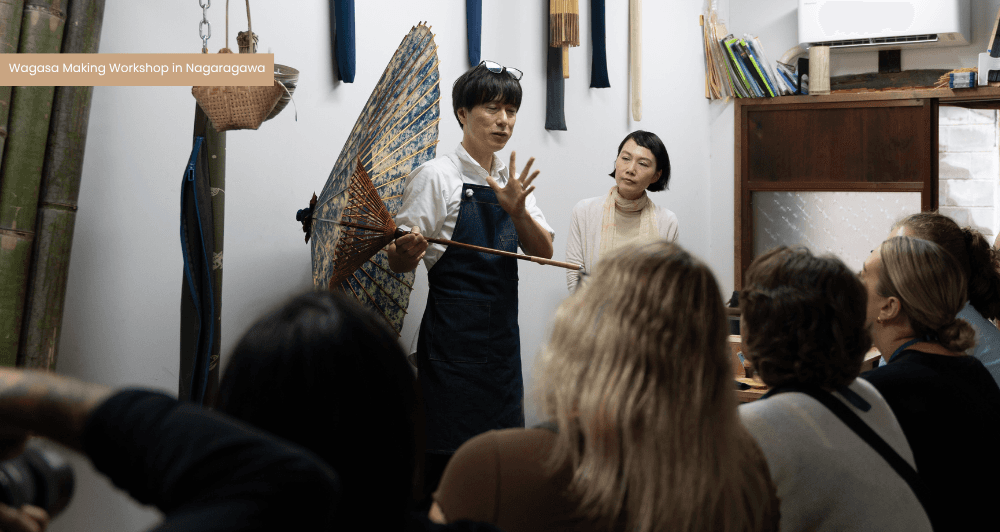
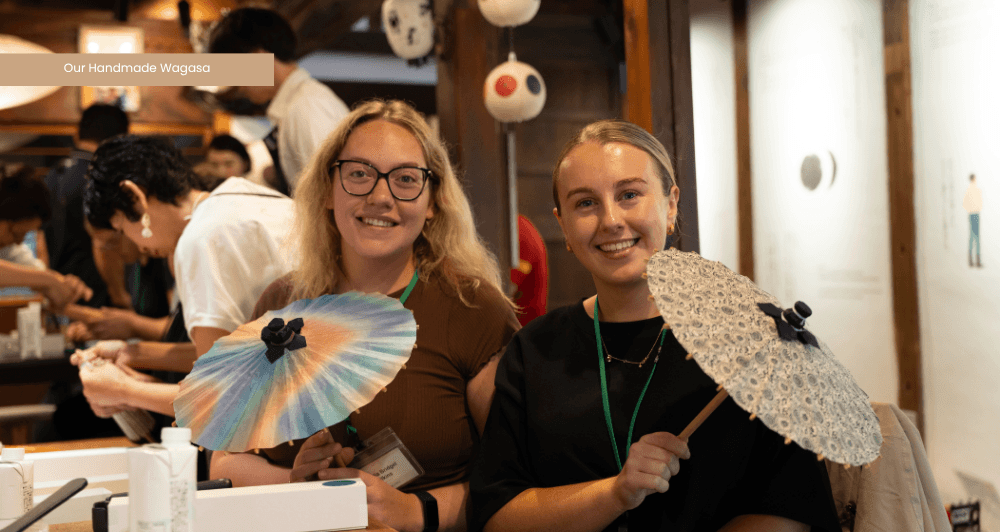
Some of our most favourite moments came from the workshops we visited throughout the course of our Japan itinerary. In the Nagaragawa area we learned about wagasa, Japan's traditional paper umbrellas, as well as washi paper lanterns. In Kanazawa, we explored Kaga-yuzen silk dyeing and learned more about the painstaking work that goes into making a kimono.
Many of the artisans spoke little English, so we relied on translation and the occasional bit of enthusiastic gesturing, but really, their passion needed very little interpretation. One lady showing us the umbrella and lantern workshops was moved to tears when someone in our group praised her dedication to the craft. It was such a genuine moment that touched the entire group – a reminder of why we love to travel.
Watching the umbrellas take shape was especially fascinating – we learned that every element is still done by hand and therefore requires incredible precision, patience and a level of skill that made us all look at the finished product quite differently. These are crafts that take years to master, and it was special to meet people determined to keep them alive in a world where so much is mass-produced.
If you're looking for things to do in Japan that give you a real connection to local culture, I'd recommend including a workshop or artisan visit. You come away with a much better appreciation of the work behind the items you see in shops and museums.
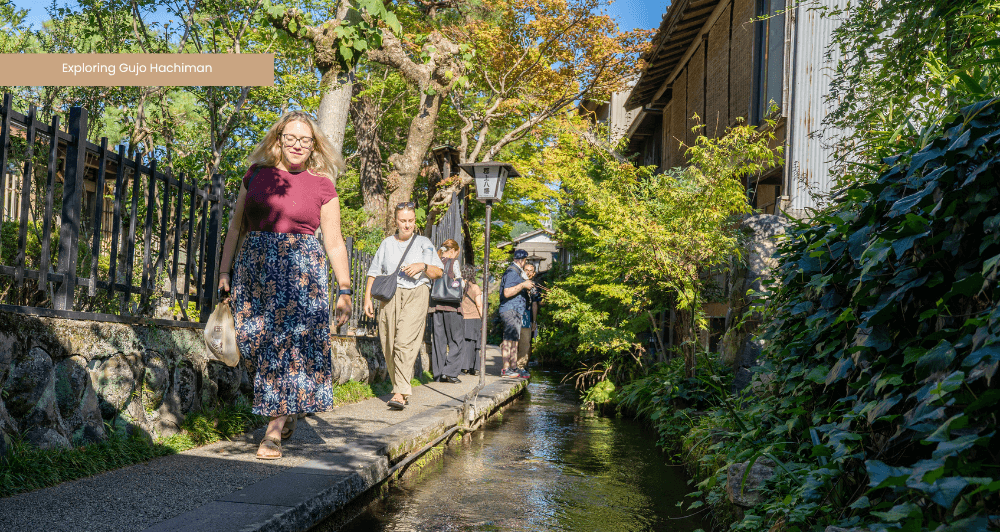
3. Exploring Gujo Hachiman and Its Surrounding Countryside
Gujo Hachiman was one of the biggest surprises of our Japan travel itinerary. So much so that as soon as we arrived, we both gave each other ‘the look’ – brows raised, mouths parted slightly in wild, happy amazement. Known for its waterways, historic streets and surrounding mountains, we could have stayed for so much longer than we did.
Our group had the choice of exploring by e-bike or on foot. Amelia, an avid dancer with the balance and confidence of a professional, took part in the full day cycling experience, while I chose a walking excursion into the countryside with our guide, Joshua. I'm not the most confident cyclist on roads, so walking felt like the sensible option.
We visited Nagataki Hakusan Shrine, where Joshua explained the significance of Hakusan mountain worship and the purification ritual of washing your hands and face before entering. The setting was so peaceful and near silent save for the calls of birds and rustle of leaves – it was completely surrounded by rich green countryside with very few people around. Later, we made our way towards Amidagataki Falls. The river had overtaken part of the path, which meant shoes and socks came off and we had to paddle through freezing water which descended down from the mountain to continue. Standing there, in the middle of the Japanese countryside, I couldn't help thinking how unlikely it was that anyone else from my little corner of England had ever stood in that exact spot. It was a reminder of how far travel can take you, not only in distance, but into moments and places you might never have imagined experiencing.
The trip up to this point had been a lot of fish - delicious fish, but a lot in all the same - so with abundant choice at our fingertips, we stopped for lunch at Pizzeria Gonza. Unbeknownst to me it is an authentic Neapolitan pizzeria, and what a surprising find that was in rural Japan. My partner's family are from Naples so I snapped photos of the Maradona memorabilia adorning the walls and, eventually, the very impressive pizza when it arrived.
In the afternoon we had the chance to swim in the incredibly clear waters of the Nagara River, which flow down from Mount Dainchigatake. After a morning of walking the cold water was so refreshing, though our presence did stop a local fisherman from casting his line as quickly as he might have intended! We also visited a local sake brewery, where we learned about the challenges facing producers as rice costs rise.
The whole day felt like a chance to step away from the usual pace of sightseeing. We were surrounded by nature, learning about the history of the area as we went from a guide who lives there, rather than flitting between attractions.
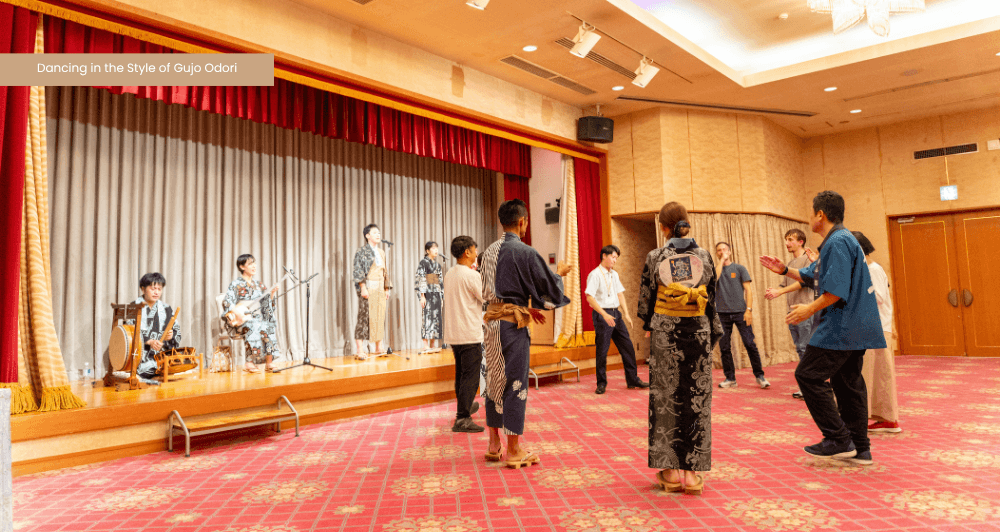
4. Joining the Circle at Gujo Odori
Gujo Hachiman is also famous for Gujo Odori, a traditional dance festival with roots stretching back centuries. We were introduced to the music and steps, accompanied by instruments including the flute, taiko drum and shamisen, a three-stringed instrument. And then we joined in.
The dance takes place in a circle, and while we can't claim to have mastered every step, it was surprisingly easy to get involved. There's something lovely about a tradition that invites everyone to participate rather than just watch from the sidelines. It was also a reminder that some of the most rewarding cultural experiences aren't necessarily the ones that require a long explanation – sometimes you quite simply just have to give it a go.
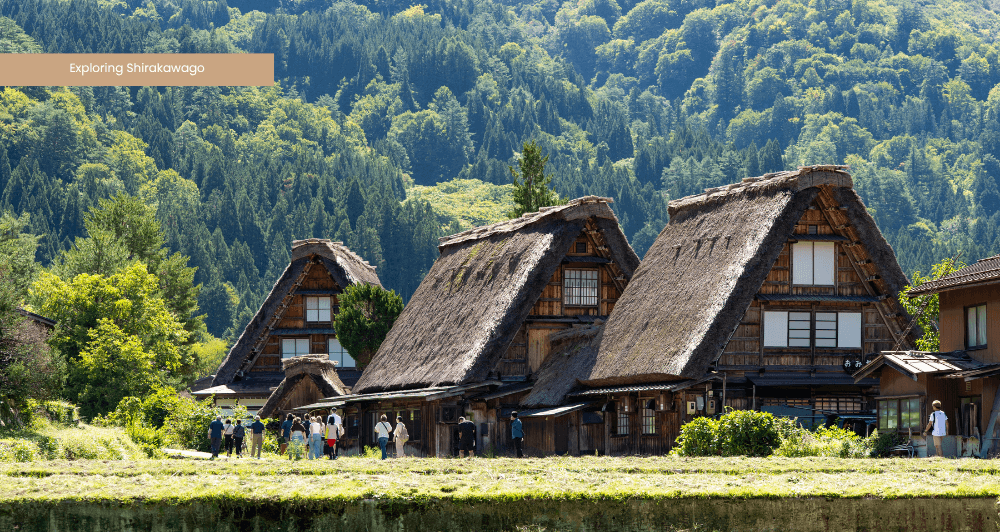
5. Stepping Inside a Traditional Farmhouse in Shirakawago
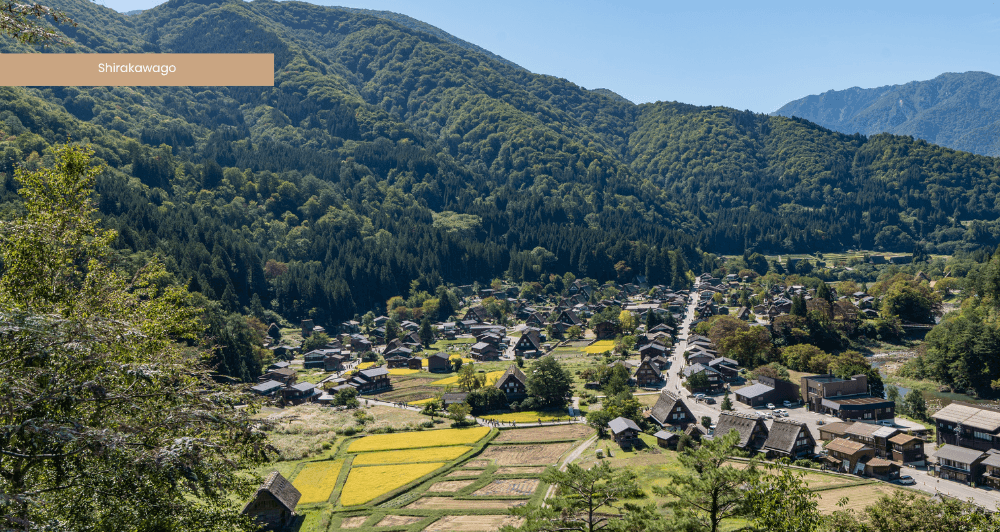
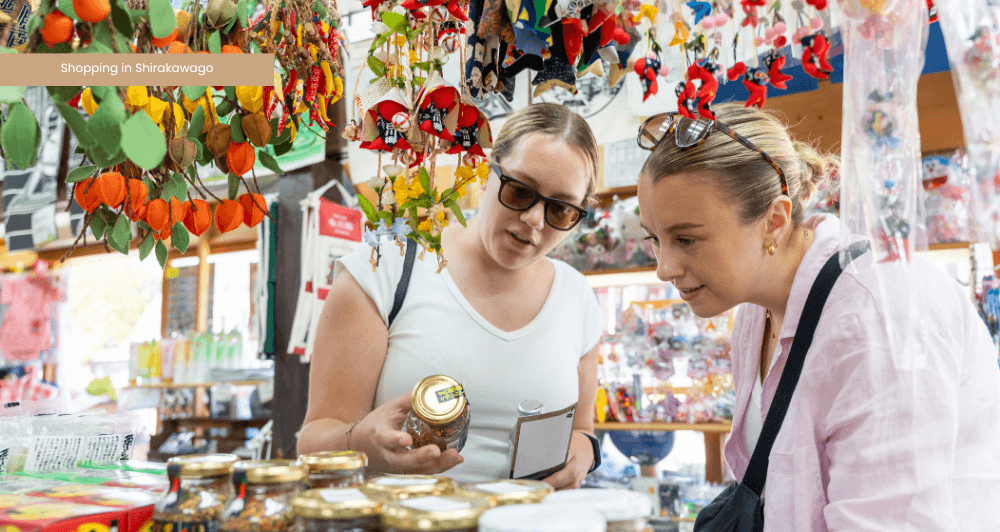
On our way to Kanazawa, we stopped in Shirakawago, a village known for its steeply pitched gassho-zukuri farmhouses. The roofs are designed to cope with heavy snowfall, and the buildings have a distinctive shape that makes the village instantly recognisable.
We visited Kanda House, exploring rooms filled with traditional tools, shrines and objects that offered insight into how people once lived and worked. One detail I found particularly interesting was learning how smoke from the central hearth helps to strengthen the timber over time, but what I liked most was that this wasn't a preserved historic attraction (though the area did feel a bit like a film set). People still live in the village, and the houses continue to be part of a living community. It felt like a really special stop between the countryside of Gifu and the more urban setting of Kanazawa, and one I’d highly recommend if you’re travelling a similar area of Japan. There’s luggage storage, a bus stop, and shops and cafes, so it’s a great little spot to spend a morning or afternoon.
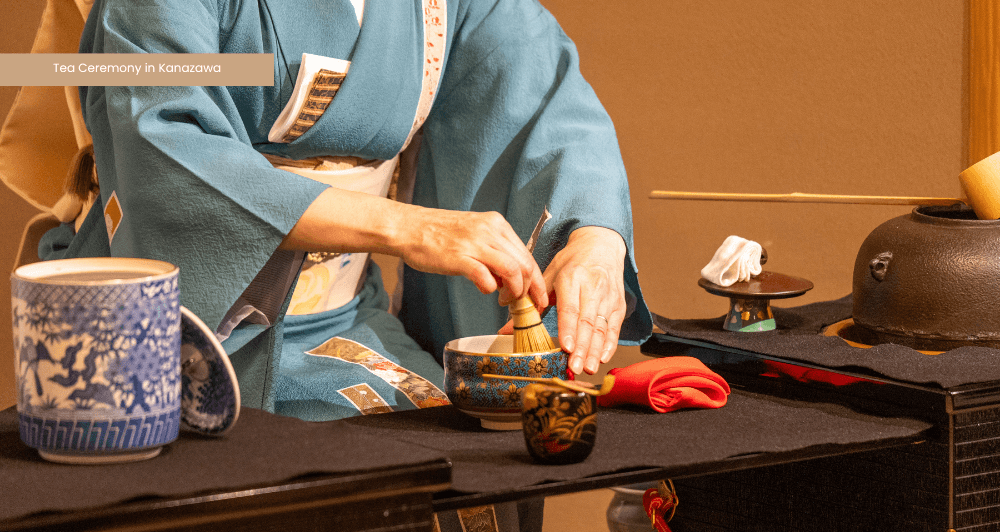
6. Taking Part in a Tea Ceremony in Kanazawa
Kanazawa also became one of our favourite destinations. We visited Kenrokuen Garden, often considered one of Japan's most celebrated gardens, and took part in a traditional tea ceremony at Kenrokutei.
We had experienced a tea ceremony earlier in the trip in Inuyama, but this one was guided by an English speaker and she very kindly went into much more detail for us. Every single meticulous stage was explained (I’ll admit I had no idea it was so extensive and held such meaning), and we even had a go at whisking our own matcha – and it was a far cry from the syrupy versions gaining increasing popularity in the West!
Before the ritual started, our guide told us that the whole experience is designed to be calming – she wanted us to leave feeling relaxed. And that we did. It was all a little bit like ASMR if you know it, there’s such a calmness to the process, as with many things in Japan. Nothing is hurried, and the care taken over each movement makes you slow down and pay attention. I would have been quite happy to sit there for a while afterwards, although the surprisingly high caffeine content of matcha meant a nap probably wasn't on the cards.
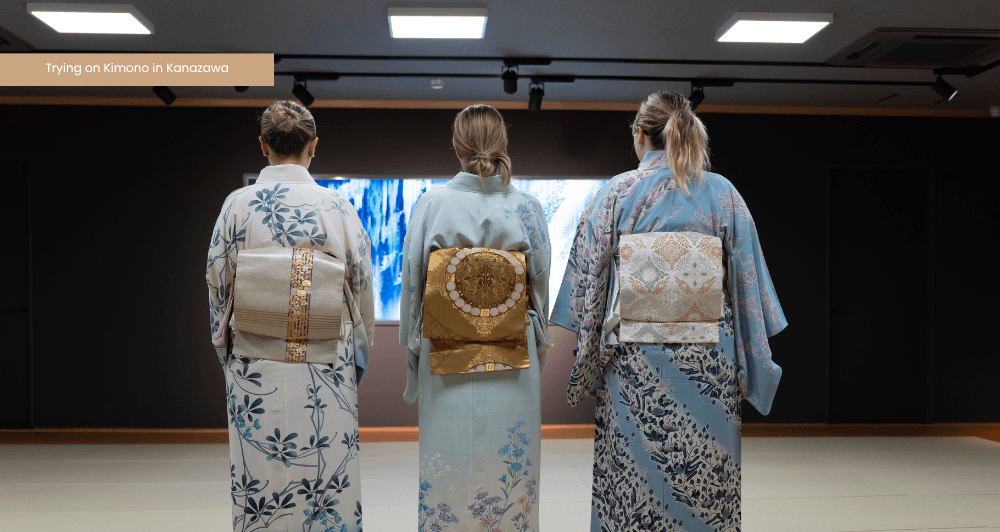
7. Discovering the Work Behind a Kimono
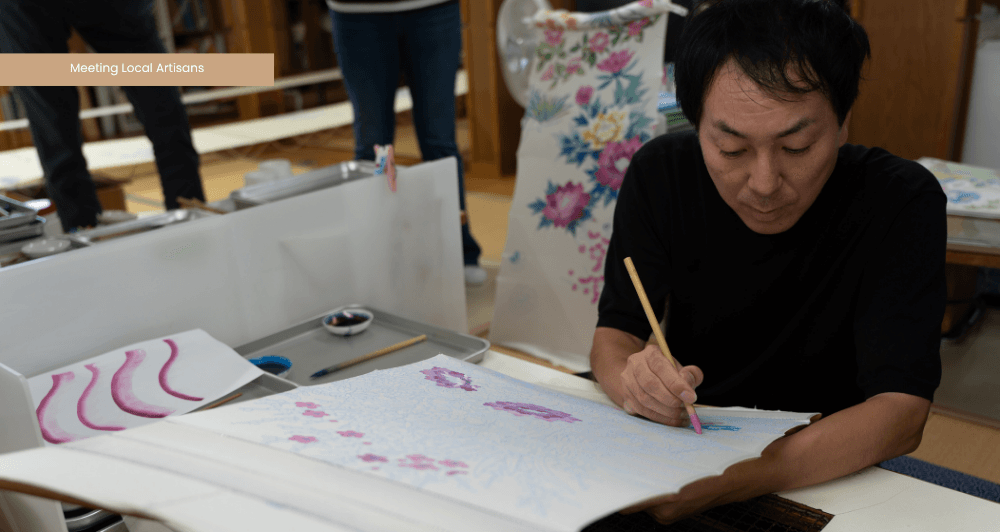
Our craft experiences continued in Kanazawa with a visit focused on Kaga-yuzen, a traditional silk-dyeing technique used in kimono making. As with the wagasa making, I couldn’t quite believe that there were places still doing every single step by hand – it was lovely to see. Seeing the process up close, the ladies sat on the floor tracing patterns and dyeing the silk made me appreciate just how much work goes into each piece, and exactly why the cost is so high for one!
A kimono can look effortless when it's worn, but the artistry behind the fabric, patterns and construction is just extraordinary. We also had the chance to try on kimonos, with experienced Japanese women helping us get dressed as we’d have had no idea how to put them on otherwise! It was a lovely experience in itself, and it really did give us a better understanding of how the garment is layered and worn, and why.
I came away with a new appreciation for why a beautifully made kimono can be so expensive. When you see the time, precision and knowledge involved, the price makes a lot more sense. It’s such a coveted piece within the culture.
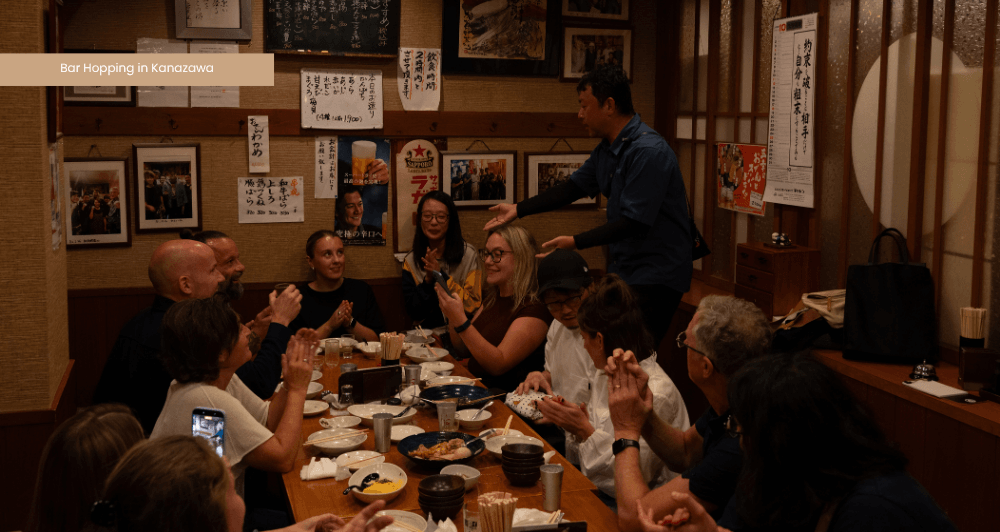
8. Bar-Hopping Our Way Around Kanazawa
Kanazawa is a brilliant city for food, and one evening we got to experience it through a bar-hopping tour that took us to three very different spots. It was a lovely way to see another side of the city after a day of gardens, temples and traditional crafts – and, naturally, eat our way around it.
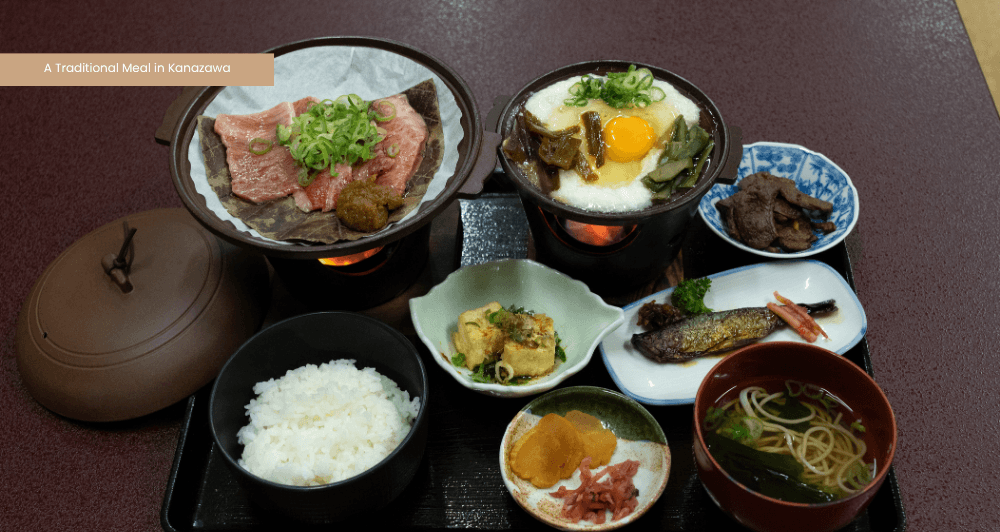
First up was CRAFEAT, a chef's-table-style restaurant where dishes were served in beautiful lacquered wooden boxes. We all wanted to take them home. The presentation was gorgeous, and it was a great introduction to the craftsmanship that runs through so much of Kanazawa's culture, even at the dinner table. We also visited Miyuki Honten, where we tried traditional local cuisine in a restaurant apparently favoured by some famous guests. It was the sort of place you might not stumble across or have the confidence to enter on your own, which is exactly why having local knowledge makes such a difference. The final stop was a tiny restaurant where we cooked Hida beef at the table, beneath enormous chimney-style extractor fans, while the chefs prepared other dishes right in front of us. I wish I could remember its name, because it was a real experience: intimate, lively and totally different from the other places we'd visited. And the evening wasn't over there – we finished with some traditional karaoke, which is always a good way to turn a brilliant dinner into a brilliant night out.
For me, this was one of the best ways to experience Kanazawa. Each stop held something different, and we got to try dishes and visit places we probably wouldn’t have found ourselves. If you're looking for things to do in Japan beyond the usual sightseeing, I'd absolutely recommend making room for an evening like this. Sometimes the best way to get to know a city is to indulge your appetite and see where the night takes you.
Where Should You Stay On a Luxury Japan Holiday?
One of my favourite things about this part of Japan was how the accommodation changed with each destination. Rather than feeling like somewhere to sleep between activities, each stay added a little something to the experience, whether that was being close to the river, waking up in a historic town or having Kanazawa's traditional streets on the doorstep.
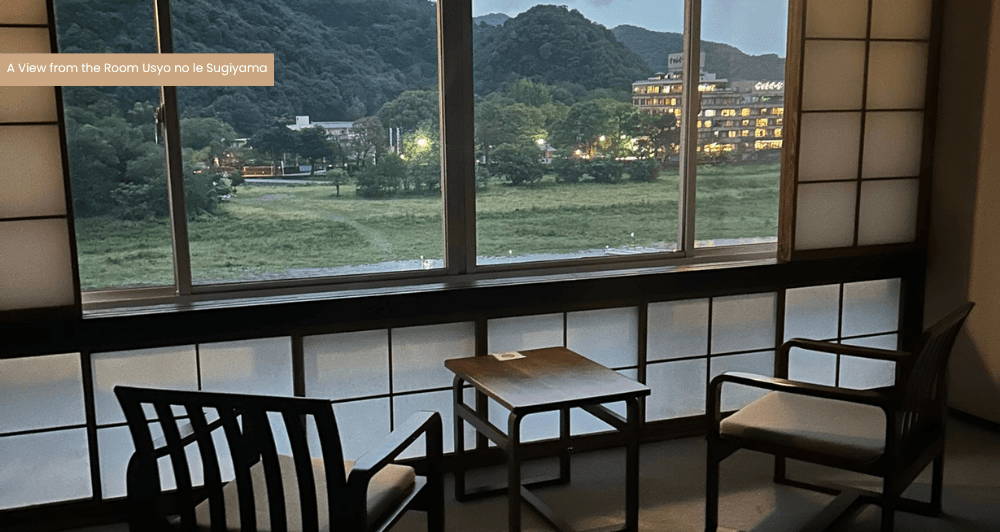
In the Nagaragawa Onsen area, we stayed at Juhachiro and Usyo no le Sugiyama, both offering a lovely introduction to the riverside setting. This is a region where the Nagara River is central to local life, so staying nearby felt particularly fitting, especially with our cormorant fishing experience taking place after dark. At these hotels, you can also watch the fishing from your room or, in some cases, your hotel's dedicated viewing space outside - it's that close. As I’ve already mentioned, the Western influence here is minimal, so each property really gave us time to appreciate the quieter pace of the area and its roots, rather than simply passing through a run-of-the-mill hotel on our way somewhere else.
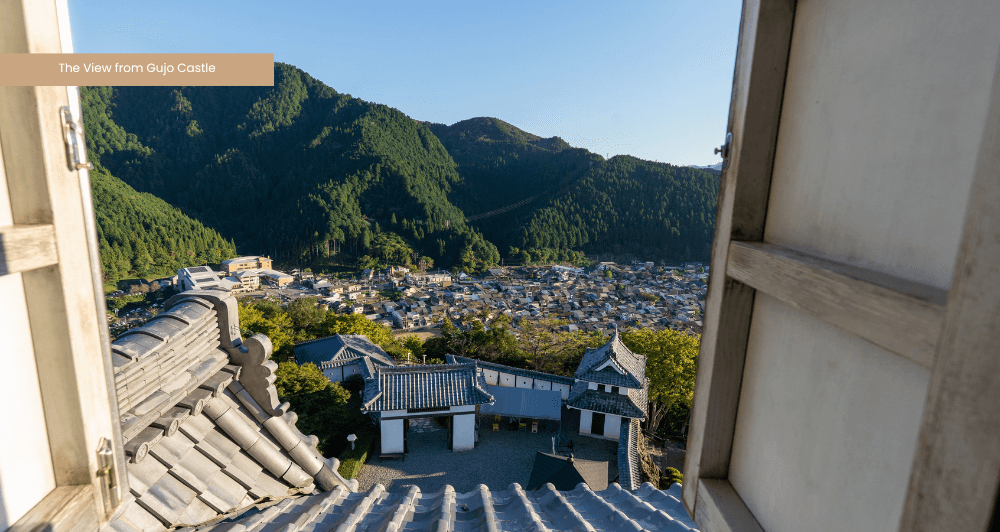
In Gujo Hachiman, we stayed at Sekisuien, a great base for exploring the town's winding streets, waterways and surrounding countryside. You can follow the road that goes behind the hotel up to Gujo Castle, which is only around a 15-minute walk away. Gujo is definitely somewhere I'd encourage people to spend a few nights if they can. Once you've wandered past the clear-water channels, traditional buildings and little shops, there's something special about being able to settle in and enjoy the town at a slower pace. It’s so quiet but as soon as you step into a restaurant or bar, the locals come alive. It feels a world away from Japan's busiest cities and staying locally gives you more opportunity to appreciate that.
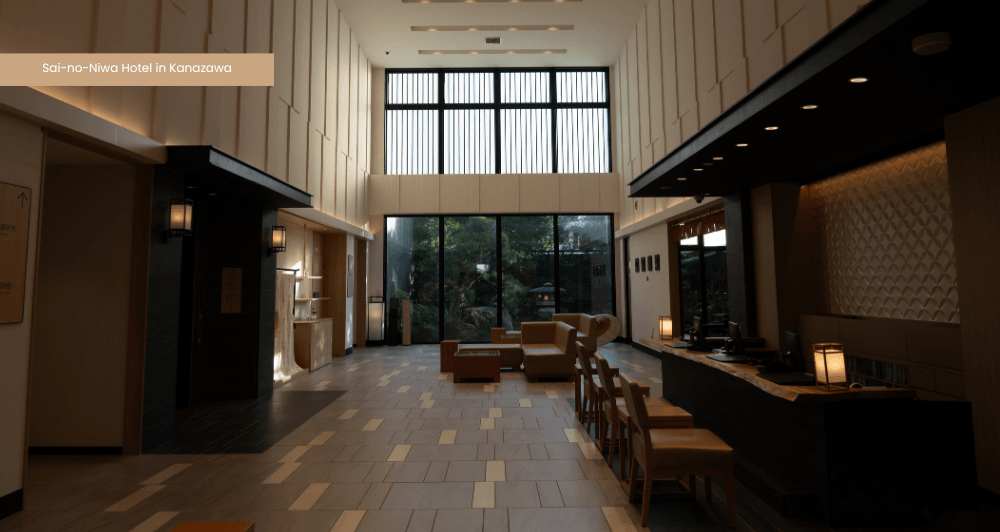
Our next stop was Sai-no-Niwa Hotel in Kanazawa, which provided a really lovely base for exploring the city's historic districts, gardens and food scene. The hotel isn’t directly in the centre, but they offer a free shuttle to the train station so you always feel easily connected. Kanazawa was one of my favourite discoveries of the trip and I wish we could’ve spent longer there. Between the Higashi Chaya teahouse district, Kenrokuen Garden, the craft workshops and our evening bar-hopping tour, there was so much to fill our time.
If you're planning a Japan travel itinerary, I'd recommend choosing accommodation that allows you to experience these destinations properly, rather than treating them as quick stops between the big cities. Staying in the Nagara River region, Gujo Hachiman and Kanazawa gives you the chance to get closer to local life and enjoy the quieter side of Japan, which was not only the purpose of the trip, but also, for me, one of the best parts.

How Easy Is It to Travel Around Japan?
I'll admit I had some reservations about navigating transport between smaller destinations. Japan has a reputation for efficiency, but when you're travelling beyond the major cities, it's natural to wonder how straightforward the connections will be as an outsider.
In practice, however, it was infinitely easier than I'd expected. Essential Japan provided us with a handy document that taught us how to read the tickets that came in our welcome pack (which is something we can offer to our clients in turn, Takashi and his team have thought of everything you could possibly need.), the bullet train was astoundingly punctual, and local JR services helped connect the cities and towns. The main hosted itinerary included coach transfers, which is again something we can look into for clients, so we could enjoy the scenery during some legs of the trip without worrying about the logistics. Add in the very popular luggage transfer services offered across the country and Japan’s infrastructure makes for some incredible easy travel days.
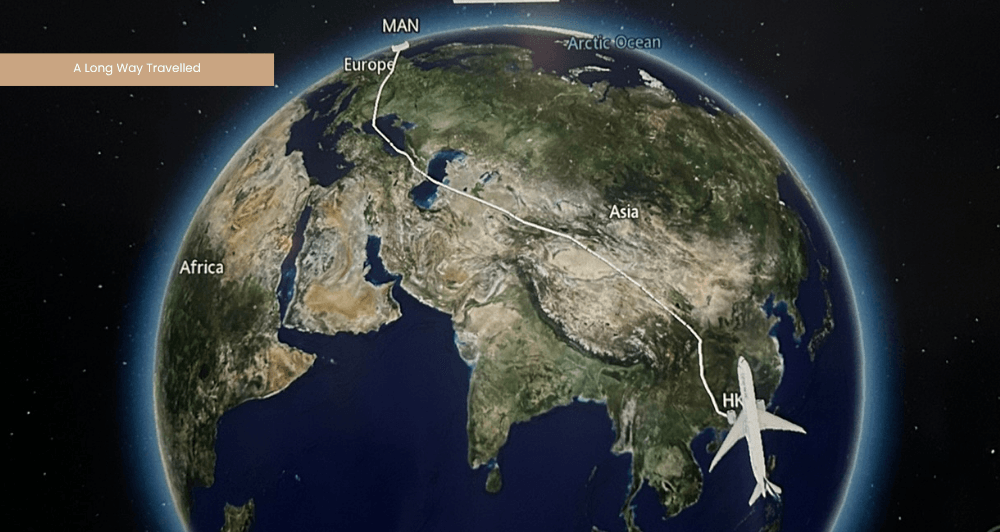
Our flights to Japan with Cathay Pacific also made a great first impression. We flew from Manchester to Hong Kong, which took around 12.5 hours, and then from Hong Kong to Tokyo for a further 4 hours. It's a long journey from the UK, so the leg room, the comfort of the seats and the food have to be good, and I’m happy to say that we were both very impressed by the entire experience.
My overall advice would be not to let transport worries put you off exploring further afield. With the right planning and support, you can include smaller towns and countryside experiences in your Japan holiday without making the journey unnecessarily complicated.
Who Would We Recommend This Japan Travel Itinerary To?
I think both Amelia and I would recommend this route to anyone who enjoys getting under the skin of a destination, whether that's through food, history, nature, art or meeting the people who live there.
It could work particularly well for:
- First-time visitors who want to bookend the experience with famous cities, while filling the middle of the trip with explorations of a different side of Japan.
- Repeat visitors who have already explored Tokyo and Kyoto and fancy discovering somewhere new.
- Couples looking for a mix of culture, excellent food, luxury hotels and memorable experiences.
- Families with older children or teenagers who enjoy being active and trying something different.
- Active travellers, including those aged 55 and over, who like walking, cycling and exploring historic towns at a comfortable pace.
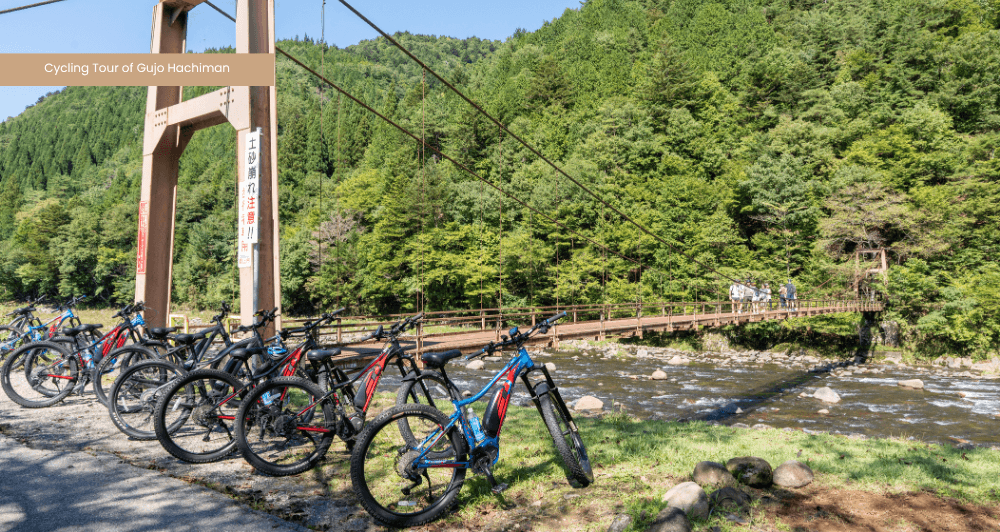
Some of the experiences we tried out do involve uneven paths, cobbled streets, hiking or cycling, and lots of walking is typically a given for most itineraries in Japan, so if mobility or any of the above is an issue, some adjustments would need to be made. The good thing about our Tailor-Made Holidays is that the pace and activities can always be tweaked to suit the people taking the trip.
If you are a first-time visitor of Japan, I believe this trip struck the perfect balance. I'd start in Tokyo as we did with a few nights to see the sights you’ve likely seen all over social media, then head into the countryside, then end with Kyoto and Osaka. If you've been to Japan before, you could spend much longer exploring Nagaragawa, Gifu, Shirakawago and Kanazawa, and perhaps leave out the big cities entirely.
When Is the Best Time to Visit Japan?
There isn't one perfect time, and the best dates will depend on what you'd most like to see.
We travelled from late September into early October and though the trip started with rain, we had plenty of glorious days. It could actually be very hot in direct sunshine, but the shade was cooler and the perfect temperature for walking. It was a good time to explore the countryside, gardens and historic towns without feeling that we were constantly battling the weather.
Spring is famous for cherry blossoms, while autumn brings changing foliage and those iconic rich red hues across maples in many parts of the country. Both are popular periods, so accommodation can be in higher demand and prices may reflect that. That’s always something to keep in mind.
I'd choose your dates around the experiences that matter most to you, then plan the route accordingly. If seasonal scenery is a priority it's worth building in some flexibility rather than expecting nature to follow a precise timetable.
Our Advice for Planning a Japan Holiday
If there's one thing I'd take away from this trip, it's that the best of Japan isn’t contained to the cities. The famous attractions are of course famous for good reason, but some of the moments you’ll remember might be the ones you didn't know to look for.
Meet the artisans. Try the smaller tours. Speak to local people where you can. And don't dismiss an experience just because it sounds popular – sometimes there is a reason everyone wants to do it.
I'd also allow a little breathing room after the flight. We only had a short stay in Tokyo at the start, and I would have loved a bit more time there to recover from the journey and see some of the city's best-known sights before heading into the countryside.
We were lucky to have Maki and Waba from Nagaragawa Tourism with us during the hosted programme. They helped with translation, guidance and all the little things that made our days run smoothly, even providing umbrellas and waterproof clothing when needed. Having local people who know the area so well made the experience feel much more personal.
For me, the best moments were often the simplest: watching an artisan work, meeting priests whose families had looked after a temple for generations, spotting enormous fish in Gujo Hachiman's waterways or sitting down to a meal somewhere we would never have found on our own.
Our Japan travel itinerary showed me just how much the country has to offer beyond its most famous destinations. I came home with a camera roll that had grown by almost 2,000 images and videos, a list of places I'm already itching to revisit, and even more ideas for the kinds of experiences I'd recommend to friends and clients.
It was easily one of the most special trips of my life. And I'm only 28 years in!
FAQs
How many days do you need for a Japan travel itinerary?
Around 10 to 14 days is a useful starting point for a first visit, giving you time to combine major cities with a few smaller destinations. Our trip included 10 nights on the ground in Japan, including the Nagara River region, Gujo Hachiman, Shirakawago, Kanazawa, Kyoto and Osaka, with a short stay in Tokyo at the beginning. If I’d had a couple more nights to enjoy Tokyo, it would’ve been perfect.
What are the best things to do in Japan beyond Tokyo, Kyoto and Osaka?
Consider watching cormorant fishing on the Nagara River, exploring Gujo Hachiman's history and beautiful riverside scenery, visiting the traditional farmhouses of Shirakawago and discovering Kanazawa's gardens, teahouses and craft workshops. These more unique experiences in Japan offer a different perspective on the country, particularly if you're interested in local culture and traditions.
Is Japan suitable for a luxury holiday?
Japan is perfect for a luxury holiday. Japan has exceptional hotels, attentive service, remarkable food and plenty of cultural experiences. A luxury Japan holiday could combine contemporary properties such as Hotel The Mitsui Kyoto with traditional accommodation, private guides, carefully planned rail journeys and hands-on experiences tailored to your interests.
Can you explore smaller destinations in Japan without speaking Japanese?
You can definitely explore smaller destinations in Japan without speaking Japanese, although some preparation helps – an “arigato gozaimasu” goes a long way, and you can tell the locals really appreciate you making an effort with the language. Japan's transport network is efficient, and travelling with a specialist local partner can make connections and transfers much easier. Guided tours and translation support are particularly useful in rural towns, where English may be less widely spoken.
What are some lesser-known places to include in Japan itinerary ideas?
Some lesser-known places to include in a Japan itinerary are Gujo Hachiman, the Nagara River region and Kanazawa – all are excellent additions for travellers looking beyond the Golden Route. Shirakawago is also worth considering as a stop between Gifu and Kanazawa. Each offers something different, from traditional crafts and riverside customs to historic architecture and beautiful gardens.
Is this Japan travel itinerary suitable for first-time visitors?
The itinerary we completed is perfect for first-time visitors of Japan. It combines a quieter, less familiar side of the country with time in Kyoto and Osaka. If you're visiting for the first time, you could add more days in Tokyo; if you've already seen the main cities, you could spend longer exploring the countryside and smaller towns.
What should you prioritise when planning a Japan travel itinerary?
When you’re planning a Japan travel itinerary, always start with the experiences that matter most to you, whether that's food, art, history, nature or luxury accommodation. Then build the route around them, allowing enough time to enjoy each destination rather than spending every day in transit. A good Japan travel itinerary should feel like a journey, not a checklist.
Japan has a way of making even the smallest details feel so incredibly special: the cleanliness of the streets, the care behind a cup of tea, the skill involved in making a paper umbrella, the sound of water running through a historic town. Our journey through Gifu, Gujo Hachiman, Shirakawago and Kanazawa gave us a deeper appreciation of those details, while Kyoto and Osaka reminded us just how varied the country can be.
If you're ready to start planning your own Japan travel itinerary, our Personal Travel Concierges can help you create a trip around the places, experiences and hotels that mean the most to you. Contact us today.
Related Articles
You May Also Like





Why Destinology?






Our Travel Partners
Sign up to receive
exclusive offers by post.
Join our postal mailing list to unlock a world of exclusive travel content. From special offers and VIP access to new launches, to expert advice and exciting ideas for your next getaway, we’ve got holiday inspiration covered. Start your Destinology journey today.
Sign Up

Destinations

TRAVEL AWARE – PREPARING FOR SAFE AND HEALTHY TRAVEL ABROAD
The Foreign, Commonwealth & Development Office (FCDO) provide the latest travel advice by country including safety and security, entry requirements, travel warnings and health. For the latest FCDO advice please refer to travelaware.campaign.gov.uk
Current travel health information can be found by visiting travelhealthpro.org.uk/ a resource set up by the Department of Health. The advice can change on all sites so please check regularly for updates.
